Wednesday, August 17, 2016

Here We Have Idaho

At the beginning of August, I moved back to Rexburg, in the Snake River Valley of Idaho, the land of my maternal roots. My family moved from the Salt Lake area to Idaho Falls when I was 16; I stayed here in southeast Idaho until I was 28, when I moved to Pullman, Washington to begin graduate study. From there I moved first to Saint George, Utah, and then to Mesa, Arizona for a PhD at Arizona State. If all goes as planned, I will soon buy a home here in Rexburg, effectively planting myself for the long term.

Photo: Idaho border signage. CC BY-SA 2.0
I loved living in the Phoenix metro area. I loved all the wonderful friends I made there, the amazing range of culinary options at both restaurants and grocery stores, the plentiful opportunities to enjoy the visual and performing arts, and the great roads (even with the not-so-great drivers). But I am really enjoying the beautiful clear skies (especially at night when I can see so many more stars), the cooler weather, the open fields and greener hills, and the total lack of anything that can reasonably be called traffic (local opinions notwithstanding). A friend recently asked me how big Rexburg is, so I did a bit of research and found the results rather amusing.
  • The state of Idaho is home to 1.6 million people; that's about half as many people as live in the Phoenix Metro area, where I just moved from. 
  • Rexburg has a population of roughly 30,000 people. This is about 20,000 fewer people than the student population of Arizona State University's Tempe campus, where I just spent the last five years as a student and faculty member. 
  • Idaho Falls, where I spent my teens and early adulthood, is about the same size as ASU Tempe. 
  • In the Winter 2015 semester (what would be called Spring semester at other schools), BYU-Idaho had a total on-campus enrollment of nearly 17,000 students--for comparison, my former employer, ASU Writing Programs, served over 11,000 students in Fall 2014
  • Bonus climate comparison: The hottest day on record in Rexburg was 102 degrees, in June 1988. That's considered pleasant spring weather in Mesa, where 120+ degree temperatures are not uncommon throughout the summer, and summer nights rarely dip below 80--which is a normal high temperature for Rexburg summers. Winters are another story. Come January or February, I will probably have to endure more than one -20 day. 
Although I will miss the rich cultural affordances of living in a major metro area, I am still a small-town girl, and I relish the thought of teaching at a smaller university. Although I will miss Arizona's mild winters, I am enjoying being able to spend summer afternoons outside again. Above all, I'm enjoying being closer to my family.

Photo: Me with several nieces and nephews at Pineview Reservoir last week, taken by Jared Robinson.
Please do not use without permission.

Thursday, July 21, 2016

Review: Ghostbusters (2016) and Ghostbusters (1984)

I went to see Ghostbusters (2016) on opening weekend, mostly because it's the first movie of the summer that I was really excited about this year, but also partly to spite certain factions of the internet who have tried to pre-emptively tank the movie by spiking reviews without even having seen the movie.

I was too young to see the original Ghostbusters (1984) when it first came out in theaters, but I did watch it and Ghostbusters II (1989) around the time the latter was released, and those two films (plus the cartoons) sparked a significant interest in the paranormal among my circle of friends for a time. We got up to some silly stuff, and to this day I'm not entirely sure how much of it we believed and how much we knew was just pretend--it's funny how the childhood imagination works that way.

My point is that Ghostbusters was a big part of my childhood. I'm really fond of this franchise; it's partly why I was so excited (and a little bit nervous) for the reboot. And it's a big part of why I was so pleased with the 2016 film. It was just really fun. I deliberately did not rewatch the original film before going to see the new one. But in the past few days, I decided I'd like to see how the 1984 film, which I hadn't seen in several years, stacks up to the new one, so tonight I popped in my old Ghostbusters DVD and wrote up a review.

Image: Ghostbusters logo stencilled on a car door.
CC0 Public domain. Free for public use. No attribution required.

To start with, here's the short review I posted on Facebook the night I saw Ghostbusters (2016): 
I really liked it! It hit all the right notes, and though the tune was familiar, it's an old favorite. I felt like it did a great job of winking at the original films without feeling beholden to them. The cameos were marvelous. The main characters were likable and at times lovable. The new gadgets were awesome. 
There were things about Ghostbusters (2016) that I did not like, but they were minor: some crude humor, Leslie Jones's character is still pretty much a token.[1] These minor criticisms are pretty much the same ones I have about the originals (though in the case of Jones's character, the fact that more than 30 years have passed make this criticism significantly less forgivable, and I really hope they fix this for the sequel).
Wondering if you should go see it? Here's my advice:
  • If you liked the original Ghostbusters and are not opposed to a remake on principle, you will very probably like this movie.
  • If you like sci-fi/action/comedy movies, you will very probably like this movie.
  • If you like summer blockbuster movies, you will probably like this movie.
  • If you are an academic, you will like at least parts of this movie, if not the whole thing.
  • If you are a butthurt dudebro, you are the villain of the story, both in real life and in the narrative, and you will definitely not like this movie.
  • If you like poetic justice served meta, with a dash of ectoplasm, you will DEFINITELY like this movie.

Now that I've rewatched the 1984 film here's my comparative review:

Ghostbusters (1984) is still a good movie. The special effects have held up well, it's got some great sight gags and set pieces, and the character actors all do a stand-up job. The soundtrack is awesome. It's still fun to watch!

But you know what? With the exception of that soundtrack, Ghostbusters (2016) is a better film. I would even say a much better film. The comedy is better. The science is better. The action is better. The characterization is better. I'm not saying the reboot is a great movie. Just that it's a good movie, and a better one than the original.

Humor is highly contextual, so it's possible that some of the jokes from 1984 have just dated poorly. The 2016 reboot does a great job of poking fun of a lot of contemporary issues; I laughed most of the way through the movie. I was a little kid when I first saw the original films, and I'm sure a lot of their contemporary humor flew over my head even at the time. Slapstick humor is more ageless, and both the original and the reboot make good use of it. Slimer and ectoplasm, pratfalls, "scares" that are not especially scary--I laughed harder at these jokes in the reboot, but it cashes in on callbacks to the original, so it's not a fair comparison. We'll call it a draw. Jokes that rely on social faux pas have never been my preferred flavor of comedy, but I recognize their role within the genre. In the 1984 film, that kind of social humor routinely punches down. In the 2016 film, the punches are aimed upward, or at least on a level, which is not only funnier but also more responsible.

Not at all surprisingly, the 2016 film's special effects and battles are more exciting. Again, I'm willing to charitably attribute this in part to technical advances over the past 30 years. But only in part. Sometimes, bigger effects and more extensively choreographed fights come at the expense of character and plot; in the reboot, the opposite occurs. The fancy new gadgets and more elaborate battles reveal aspects of the characters and advance the plot.

I also found the new Ghostbusters more personally relatable, possibly because the main characters are women and I'm a woman, but I think there's more to it than that. First of all, all four of the 2016 leads are much better developed than those in the 1984 film, which mostly focuses on Venkman, who is actually a deeply repugnant character (more on that in a minute). All the 2016 leads are given backstories and character arcs. The amount of time spent on each of them is also more equal. Ghostbusters (2016) is truly a buddy movie.

More so than because of my gender, I believe I found the new team relatable (and the old team comparatively unrelatable) because I am now an academic myself. I aspired to academia from a very young age, but I had only the vaguest notion what it was like--one friend's dad was a professor of archaeology, another was a rocket scientist, but my most vivid notions still came from the media. Both the 1984 and the 2016 teams are made up of three academics and one everyman character. But with the exception of Egon and Stanz's characters, I don't recognize my professional world at all in the 1984 film. The 2016 film's depiction of academia and academics had me and my fellow academic friends in stitches. It was absolutely on point.

I admit that "relatability" is highly subjective, and I don't pretend to be unbiased. But even if the 2016 film's increased relatability is at least in part because I share a gender with the leads, that's a really good argument for more films with primarily-women casts. I lived 37 years enjoying hundreds of SF/action/comedy movies starring men. I've identified with male heroes in the movies and TV shows I watch and the books I read for 37 years--much more so, often, than I did with the women in those same stories (who typically didn't do much and were most often written by men, I must add). And it's a real shame that I had so few opportunities to identify so strongly with women heroes in the genres I love best. It's perhaps an even bigger shame that men of my generation had so few opportunities to identify at all with women characters. 

As much as I still love my male-led genre classics, the 2016 Ghostbusters was special for me because I didn't have to put as much effort into identifying with the heroes. Now, I think making an effort to identify with people who are different than you is really important, but so is seeing yourself reflected in your heroes. I want the rising generation of girls and boys to grow up with plenty of opportunities to identify with and admire both men and women heroes.[2] I don't want the box office to be dominated by female-led films the way it has historically been dominated by male-led films (though I'm totally up for more gender-flipped remakes; it's a really interesting creative exercise and frankly, shaking things up creatively in a major way is pretty much the only good reason to do a remake). I would like something much nearer to parity. Contrary to the popular narrative, women have always been a large and essential part of SF fandom. There is an audience for women-led genre films like this, and Hollywood has begun to realize it. The butthurt dudebros are going to lose the culture war, but only because they can't abide sharing any toys at all. (If you are a guy who is not opposed to seeing more women leads and women in general in your media, you are not a butthurt dudebro, and you have nothing to worry about.)

The question of relatability isn't simply one of gender or professional identity. As I wrote before, Peter Venkman is a surprisingly repugnant and unredeemed character for a heroic lead in an '80s film (antiheroes are more common nowadays). In contrast, all of the 2016 reboot's leads are likable as well as heroic. It wouldn't be fair to compare Venkman to four awesome women, and I don't have time to line up the other three counterparts, so let's stick with one whose narrative arc is most similar to Venkman's (though it is, as you'll see, a very superficial similarity): Dr. Erin Gilbert.[3]

SPOILERS AHEAD.

Dr. Erin Gilbert (Kristin Wiig):
  • Appears to be a brilliant and conscientious physicist
  • Is first seen nervously preparing to give a lecture; the equations on her white board are apparently legit awesome science (plus some nifty Easter eggs)
  • Craves acceptance and prestige from those she perceives as her peers (this gets her into trouble)
  • Through backstory we learn that she set aside her interest in studying the paranormal in order to be seen as credible in the eyes of her colleagues; in doing so, abandoned a research partner and childhood friend (but believed that she was doing Abby no professional harm)
  • Is denied tenure and fired for having written a book on the paranormal prior to her career in academia (likewise, their unconventional research subject causes Abby Yates and Jillian Holtzmann to lose their institutional support, such as it was)
  • When she realizes the pain she caused her friend, Erin is remorseful and works to repair the relationship, both personally and professionally
  • Awkwardly tries to hit on Kevin the airheaded blonde secretary; is totally ignored by him, still likes and looks out for him. Though she continues to admire his appearance (something he seems accustomed to and comfortable with), she does not press her advances
  • With one notable lapse back into her selfish need for personal validation[4], works together with Abby, Erin, and Patty in a true partnership to do Awesome Paranormal Science and save the city from ghosts
  • As a reward for saving the city, Dr. Gilbert and her team ask for and get a firehouse and other resources to continue their work of doing awesome science and protecting the city. That's it. There's no romance. No fame. Just awesome women supporting each other and doing awesome chaotic-good science because awesomeness is its own reward
Dr. Peter Venkman (Bill Murray):

  • Has two PhDs, in psychology and parapsychology
  • Is first seen unethically tampering with his own research project, deliberately causing pain and humiliation to a male research subject and ignoring the very results he is supposedly looking for, in order to hit on a hot blonde female research subject
  • Peppers his colleagues (and pretty much everyone else he doesn't want to bang) with sarcasm and put-downs
  • Gaslights a woman librarian about having seen a ghost (sees the ghost himself shortly thereafter and flips out)[4]
  • Loses his team's funding and evicted from their research lab not because of their unconventional research subject but because Venkman is legitimately a terrible researcher who until now doesn't even believe in his own work. He deserves to be fired, and he takes his colleagues (who apparently do care about and are good at research) down with him
  • Immediately tries to drum up the team's morale by talking about how they don't need academic support anymore because they can provide a very expensive service that will soon be in high demand. (Throughout the film he is consistently motivated by self-interest)
  • Creepily hits on a client, and persists in his pursuit of her even after having been rebuffed multiple times and even though he acknowledges that his behavior is creepy[5]
  • Continues to be an arrogant a-hole throughout the entire film. His knee-jerk antagonism of an EPA agent who was actually doing his job (and whose own contempt is at least partly a reaction to Venkman's bad behavior) leads to the shutdown of the team's ghost containment unit, which puts the entire city in Armageddon-level danger. Projects responsibility for this onto the EPA guy; is never called out on it in any way
  • Is portrayed as the hero of the film; the others are basically his vastly more competent sidekicks
  • As a reward for saving the city, gets fame, glory, and the girl
If "relatability" is an important part of what makes a movie enjoyable, then I guess I can understand why butthurt dudebros cling to the original Ghostbusters with such extreme fervor: like them, Venkman is an entitled a-hole loser. And for this, he gets everything they fantasize about--a fantasy the realization of which is becoming increasingly scarce both in the media and in real life (thank goodness)! For me, and for a lot of guys I know, Venkman was always alienating; I identified with Egon, and I'm happy to say I still identify with Egon because Egon is awesome. But Erin Gilbert, Abby Yates, Jillian Holtzmann, and Patty Tolan are all my kind of heroes--heroes I can not only relate to but also genuinely admire, even with their faults.

The aforementioned butthurt dudebros were afraid that the reboot would ruin their memories of a beloved film from their childhoods. Perhaps they were right to fear that. If Ghostbusters (2016) had been an inferior film, Ghostbusters (1984) would have remained untarnished. By not only being a better movie on its own merits, but also one which both affectionately and critically talks back to its predecessor, Ghostbusters (2016) has indeed diminished my enjoyment of the original. I didn't expect that, but in retrospect, I think it's a good thing.

[1] Jones' acting and comedic timing were great; she's often the best part of any scene she's in. What I mean by saying that her character was a "token" is that she is the only POC among the main cast--and there are precious few POC in the film at all. Seriously, scroll through the full cast list on IMDB. SO MANY white faces. And this is NYC! Seriously! I will say that although both Patty in the 2016 film and Winston in the 1984 original were the "blue-collar" members of team, Patty at least had a greatly expanded role, and she wasn't just world-wise. She had studied the weird and creepy history of the city in her spare time, and her self-education contributed vitally to the team's success. Though she lacks their credentials, Patty is Erin, Abby, and Jillian's intellectual peer.

[2] Shout-out here to Rey from Star Wars: The Force Awakens. I wish she were there for 7-year-old me; I'm proud she's there for my nieces and nephews, who all love her and identify with her.

[3] A note on names: whether we refer to someone by their first or last name indicates a degree of familiarity or formality. First name typically is less formal and more familiar. Last name is more formal and less familiar. The tendency to use only last names in professional contexts has also faded over time; it's much more common now to call colleagues by their first names even in professional contexts and especially when those colleagues are equals and friends. Although they're both doctors, in his films Peter Venkman is typically called by his last name, and in her film, Erin Gilbert is most often called by her first name (as far as I can recall anyway). But I would argue that this isn't a gendered slight; it's actually a reflection of how relationships are constructed within the films. I take the liberty of following the films' own name-use conventions.

[4] In a key bit of backstory from the 2016 film, we learn that Erin was gaslighted about her own paranormal experiences as a child. This is definitely not a narrative accident. It's subtly lampshaded by Bill Murray's cameo as a paranormal debunker who goads Erin into releasing a trapped ghost. This leads directly to his character falling out a window and probably dying (it's not explicitly shown). What a beautiful piece of intertextual comeuppance!

[5] To his credit, Venkman refrains--not without a struggle--from taking advantage of Dana while she's possessed by Gozer and extra-highly sexualized. But it's worth noting that later Gozer-Dana does get it on with her extremely dweebish (and likewise then-possessed) neighbor, whose advances she has previously rebuffed. And Venkman does still win her in the end. The sexual politics here are truly appalling, though not extraordinary for the time.

Saturday, March 26, 2016

Live Blogging General Conference: April 2016


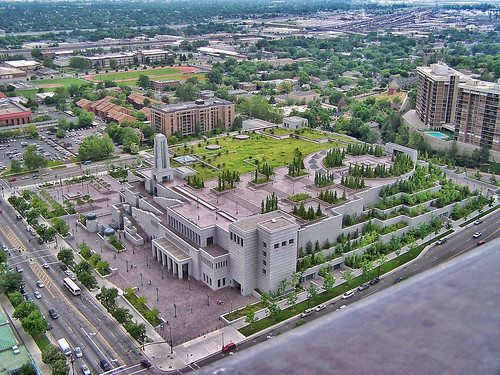
Image Credit: "Salt Lake Temple Square Flower" by Jeff. Flickr. CC BY-NC-SA 2.0
 
Hello again! As has been my tradition for the past few years, I will be live blogging General Conference, the twice-annual worldwide gathering of the Church of Jesus Christ of Latter-day Saints, when Mormons (and friends) around the world gather in our homes and church buildings and in Salt Lake City, to hear the general authorities and officers of the church speak. The first session is held the week before the remaining five sessions, and is a special session for the women of the church, ages eight and up. There is a Priesthood session for the men of the church on Saturday, April 2. You may watch all sessions of General Conference live (or time-delayed) online at lds.org, the Mormon Channel on YouTube, and on byutv.

This blog records what I hear and think as I listen; it is not intended to be a summary and my views are my own. I highly recommend that you watch or read conference for yourself. Talks can be watched and read at conference.lds.org, and you can also read summaries here.

General Women's Session 


My roommate Abby and I are having a little spaz-out during the musical number because the choir is so beautifully diverse, and also some of them have MAGENTA HAIR! And then Abby recognized one of her friends singing in the choir. Isn't it beautiful!

Cheryl A Esplin

Sister Esplin reminds us that service is a portal, or catalyst for empathy and love. Some kinds of service are very small and simple, and others require careful reflection, planning, and sometimes great effort. But whether small or great, acts of service born of compassion are always worthwhile.

Neill F. Marriot
"Love means making space for someone else in your life." One of the things I love about Sister Marriott's talk is how many women leaders of the church she is quoting--and this is, I am certain, a deliberate rhetorical choice, as was quoting a mention of Heavenly Mother. I love how Sister Marriott is talking about how we, in our imperfect ways, use our God-given gifts and inclinations to love and serve others. She is talking about a broad view of what motherhood means, while also celebrating traditional motherhood. "We must anchor ourselves to eternal principles, and testify of them, no matter what the world's response." And the examples she chooses are examples of testimony given in love and kindness, and which are attentive to the differences of experience and capability of those we seek to serve, nurture, and teach.

OK, I'm apparently going to tear up during every single video presentation during this session--all of them are about refugees.

Linda K. Burton
The General Relief Society, Young Women's and Primary presidencies have launched a new refugee relief effort. I'll post a link to this once it's available. She reminds me that as important as it is to love and serve our neighbors in faraway places, it is equally important to serve our neighbors next door.

The talks so far have reminded me, too, that the women who are among the general officers of the church are in many cases leading the way in boldly teaching and serving within the church and throughout the world.

How beautiful is this choir? It's just so beautiful. I love it.

Henry B. Eyring
President Eyring always speaks so tender-heartedly. I love what he has said about the women in his life. I'm a bit troubled by his telling us three feelings we have had tonight because of the messages we have heard. It's true (and unsurprising) that tonight I have felt love, the witness of the Holy Spirit, and a desire to go forth and serve as I've listened to the messages given by my church leaders. But past experience has taught me that not everyone who is listening has felt those things, and it feels uncomfortable to me to hear a man--even a man I love and respect and regard as having the gift of prophecy, as I do President Eyring--telling women what we feel. There's a long history of women being told what we feel, or should feel, and that brings a lot of baggage. So I appreciate the intent of this message, but I feel that the way it was expressed was unfortunate. But when he shifted to a witness of the Lord, and to expressing a hope and prayer for what we will feel and what we will do, my spirit shared that witness.

Saturday Morning Session


Henry B. Eyring
The spirit and practice of gathering is essential to the work of the church. At conference time, we gather virtually and in spirit together, and together seek to draw nearer to the Lord by listening to the messages that church leaders have prepared. Feeling the love of the Savior and the joy that accompanies it helps us endure trials of our faith--but what do we do if or when that feeling fades? President Eyring recounts the parable of the sower. We must not only receive, but continue to nourish the seed of faith that was given to us. I think about my roommate Stephanie's efforts in her garden here in Arizona, compared to the gardens I've seen in northern Utah and Idaho. Stephanie has to work much harder than my northern friends so that her garden will flourish. But even my friends who live in more fertile climates must regularly till, and water, and weed, and battle pests in order to receive a harvest. And in my own life it has seemed that sometimes I had good soil and other times I had hard and rocky soil. The great thing about this parable is that our souls, like the soil, can be cultivated. President Eyring also reminds us that the witness we receive during this conference may not be identical to the message that was given, but will be an affirmation of gospel truths that have been testified, and will show us what we need to do to draw closer to the Lord.

Mary R. Durham
Just as people have different "love languages" or "learning styles," not everyone feels the witness of the Holy Spirit in the same way. But we can see many patterns of revelation in the scriptures, which can help us to recognize how the Spirit might speak to us.

Donald L. Hallstrom
Ancient and modern prophets have borne witness that we are the offspring of deity. What does it mean to be a child of heavenly parents? Understanding our true relationship to God is not only necessary to salvation but, when it becomes the core of our identity, provides strength and stability in our mortal lives--other aspects of our identity may change over the years, but this relationship will never change, nor will the love our Father has for us ever cease. Many forces in the world try to make us forget who we really are--and some have never received a witness of their divine heritage. We have so many choices as to how we shape our own identities, and that's wonderful, as long as we never forget our first identity. I am a child of God!

Gary E. Stevenson
He began with a story of a ski trip and mislaid keys that prevented them from accessing and using their comfortable car. The minute he said "keys" I knew we were going to have a talk about the restoration of the priesthood. It's not a perfect analogy, I think, because a church without priesthood keys can still function well, bless the lives of its members, and do much to move the world toward Zion, whereas a car without keys is just a useless hunk of metal, plastic, glass, and upholstery. But it's indeed true that priesthood keys enable critical gospel work that would not be possible without them--the keys of gathering and sealing, for example. And while not all will hold the keys, all may access the power that comes through their use.

Kevin R. Duncan
Forgiveness brings healing to the one who forgives, not just the one who is forgiven. The principle and practice of forgiveness is an opportunity to exercise empathy, and to cultivate love for imperfect people. We are sometimes the victim and sometimes the offender. Forgiving is not excusing, but as we all fall short, we all need compassion and an opportunity to start over. And we all need to practice tolerance, which is an opportunity for learning! To forgive, we need to understand, and to understand, we need to listen to those whose perspectives and experience differ from our own. The atonement isn't just for those who need to repent, but also for those who need to forgive, and God will help us be able to do both.

Steven E. Snow
Our hymnal is a great blessing to our worship. This is certainly true for me--singing with my ward choir, or with a church congregation, is often when I feel the greatest spirit of communion. The hymns teach pure and simple truths. The 1985 edition of the LDS hymnal included what was then a new hymn, "Be Thou Humble." Humility is so important to the flourishing of all worthy and healthy relationships, and something that we seem to need continual reminders of. It's so easy for pride to seep into our hearts, and pride is fundamentally isolating. No amount of righteous living will exempt us from painful trials, but humility can help us to weather them.

Dale G. Renlund
Because of the spiritual distance between ourselves and God, we may come to feel entitled to grace and blessings, and to resent when things seem hard or unfair. But as we draw closer to God, the further we get from such childish notions, as our hearts are filled with gratitude and humility. While I certainly wish that material goods were distributed more equitably, for the good of my spirit I don't want life to be fair--I want something better. The blessings God provides are out of all proportion to what I could ever deserve. It's true that I also want to be free from grief and trials as much as possible. But I understand that enduring these hardships is an unavoidable part of mortality, and that the practice of enduring faithfully makes me stronger.

And now the choir is closing with my favorite hymn that's not in the hymnal: Come Thou Fount of Every Blessing!

Saturday Afternoon Session


Some of the BYU-Idaho students in that choir could be my students this coming Fall! I'm so happy to be returning home to Idaho and to settle down at last. Being a student at BYU-Idaho is great, but being a professor will be even better.

During the sustaining of general authorities and officers of the church, a lone person voiced opposition. This happened during last conference, though there were more voices that time. It surprised some members for whom an opposing voice had not been heard in their lifetimes, but it's not a new phenomenon. The purpose of the sustaining vote is not to decide who will lead the church (it's not an election). Callings to serve in any office in the church, from the highest to the lowest, come by revelation and are extended by established priesthood authority. But as members, our vote is an opportunity to affirm our commitment to support and assist those whom the Lord has called in the work of building Zion. It does not necessarily mean that we always agree with everything they say or do, or that we think they are infallible, but that we recognize their authority and stewardship within the church. I am glad we have the opportunity to offer a sustaining vote--and, yes, also the opportunity to voice opposition. It is important to me to continue to have a chance to officially affirm where I stand, and not something I do lightly or automatically.

Ronald A. Rasband
2 Nephi 31:20 is my family's unofficial mission statement; my mom had it embroidered on a banner and it hangs just inside my parents' front door. I appreciate Elder Rasband's reminder that we cannot "endure to the end" alone, but that we need to support and sustain one another as we press forward together. Eternal life is not a solitary experience either; the associations we cultivate in this life will continue in the next. As Jesus reaches out to us to lift us up and rescue us from sinking beneath the waves of life, so we must also reach out to and lift up our brothers and sisters. I can imagine myself with one hand firmly grasped in the Savior's hand and another reached out to hold fast to those whom I love.

Neil L. Andersen
Family configurations increasingly do not match the pattern extolled by the church; while we will continue to teach toward the ideal, we must increasingly be sensitive to the knowledge that many in our congregations do not experience it themselves. It seems very difficult to me--but essential--to affirm the doctrine of eternal families in a way that is inclusive of and compassionate toward those whose experience doesn't match it. We can take solace in the knowledge that regardless of our mortal family's circumstances, we are all part of a heavenly family. And we can do everything in our power to help our spiritual brothers and sisters feel that they are a part of that family, and a part of ours.

Mervyn B. Arnold
I was touched by Elder Arnold's tenderness as he spoke of going to the rescue of those who are physically or spiritually suffering or in danger.

Jairo Mazzagardi
Many converts have powerful stories of seeking for truth and light that led them eventually to the restored gospel. Indeed, Joseph Smith's account of the first vision is a moving account of the power of spiritual searching. While being born and raised in the church is a precious blessing, I think those of us who were sometimes feel a kind of holy envy, or a longing to have such a powerful conversion experience ourselves. But of course we must all be converted to the gospel, and such conversion must involve earnest searching. Perhaps because I understand the necessity of diligent searching to the conversion process, I do not regard uncertainty or doubt as dangerous to faith but as essential to it. But the purpose of searching is to find, and God promises that those who seek him will find him.

David A. Bednar
Elder Bednar talks about revelation and rebirth almost continually. And he has a very recognizable rhetorical method, which is precise and logical--for instance in this case he constructs an argument (a claim with reasons, or a series of connected propositions leading to a conclusion) about the relationship between key ordinances and the powers of heaven. I appreciate that while the general authorities are unified in purpose and message, their individual methods allow them to speak to a diverse church body, so that listeners have an opportunity to receive teaching in a language they can understand. And his propositions tend to have two parts: the first takes one principle which is well understood and the second part expands it, illuminating a less-well-understood aspect or providing a new insight. For instance, there was his seminal talk on the cleansing and enabling power of the atonement, or part of today's message about the blessing and sanctifying of the emblems of the sacrament.

M. Russell Ballard
Elder Ballard has given many memorable talks, and written an important book about the importance of counseling within our councils within the church. Today he's talking about family councils. As important as the tradition of "family home evenings" is, so are family councils, and they serve different functions. FHE is about sharing a gospel message and enjoying activities together; councils are for planning, solving problems, building and strengthening relationships, and praying with and for one another. Family councils can be formal or informal, and be planned or happen spontaneously. But some family councils should be planned and prepared for on a regular basis. All members of the family should have opportunities to participate in and contribute to family councils, though at times a family council might occur between the whole family, just the parents, the parents and one child, or one parent and one child. Single members might participate in "roommate councils." Counseling with my family has been essential to meeting the challenges of our lives individually and as a family.

The Priesthood Session was broadcast Saturday at 6pm MDT, 5pm Arizona time. However, I am not asked to attend that session and did not watch it live so that I could get some grading and writing done before Sunday.

Sunday Morning Session


Thomas S. Monson
4 new temples: Ecuador, Zimbabwe, Brazil, Peru! 

The gift of free agency is precious, and should be used for righteous purposes. I appreciated that the choir sang "I Will Follow God's Plan for Me" prior to this talk, because the two messages complement each other. The plan of salvation involves crucial decisions that are essential for everyone, and those who have made sacred covenants share eternal goals--yet though the plan of salvation is universal, God's plan for me is individual. Choosing what is right, and right for me, is not always easy to know or to do. But the "easy wrong" is harder in the end.

Bonnie L. Oscarson
Knowing and believing are different things--we may know but not believe. And I think we can believe but not know. If we know and believe, then do we act according to that belief? We claim and believe that families can be sealed for eternity in the temple--do we engage in family history and attend the temple to perform ordinances for our ancestors? We claim and believe that the Book of Mormon is another testament of Jesus Christ, and that together with the Bible they contain the fulness of the gospel, but do we diligently study the scriptures? We claim and believe that God stands at the head of this church and leads it. But do we attend our meetings and magnify our callings? Conversion, a change of heart, happens over time as we exercise our faith consistently. The spiritual perils of our day are the same as they have always been--pride, the cares of the world, the fear of men, which are represented in Lehi's vision of the Tree of Life as "the great and spacious building." After we have partaken of the fruit of the gospel, all is not done. We must daily choose faith over doubt.

W. Christopher Waddell
"Sometime's it's just hard for me to think about Jesus!" Sorrow touches everyone from time to time along our mortal journey. Three steps to peace: learn, listen, and walk. A proper understanding of the gospel and its ordinances does not eliminate sorrow, but gives us hope that can overcome that sorrow. While living the gospel brings peace and comfort to our lives, not every wound will be healed in mortality. Bishop Waddell, like Sister Oscarson, speaks about the vision of the Tree of Life, and warns of the dangers of heeding the calls from the great and spacious building. The proper response to the mocking and scorn of those in the great and spacious building is not to debate, but to ignore.

D. Todd Christofferson
We believe in fathers--in the ideal of the man who puts his family first! We teach it and strive to practice it. Fathers and mothers lead the family as equal partners. Men of the church know that the ideal of manhood is to be found not in worldly models of aggression, individualism, and autonomy, but in our Heavenly Father, who loves, provides for, and teaches His children by word and example. Elder Christofferson continues to describe examples of worthy men who not only serve their families but strive to serve their communities. Providing correction and discipline is part of parenthood, but must be exercised in soberness, love, and a desire to help a loved one to self-mastery; anything approaching abuse is wicked. "Loving the mother of his children—and showing that love—are two of the best things a father can do for his children.” There is no shame for those who, despite their best efforts, are unable to provide for their families by their own means. Seeking help from family, from the church, and from the community when circumstances warrant is an act of love and humility. Individual adaptations to the divine pattern for families are necessary. Even God the Father entrusted His own son to a foster father! I love that reminder that even the Holy Family did not actually match the "ideal nuclear family" model! Develop strong relationships, and continue to progress from good, to better, to best.

Quentin L. Cook
There are now 150 operating temples; when all announced temples are completed, there will be 177. This is cause for humble rejoicing. On this day in 1836, the first temple of this dispensation was dedicated in Kirtland, Ohio, and the Lord Jehovah, Moses, Elias, and Elijah appeared to Joseph Smith and Oliver Cowdery to restore the keys of this dispensation (see D&C 110). Can you picture yourself in the temple? If not, what do you need to do to get there? The unprecedented availability of temples, and the technology to engage in family history work, are a tremendous blessing and obligation; through temple ordinances for the dead, salvation is available to all God's children throughout all of human history, and this generation is called to be "saviors on mount Zion." Live to be worthy of these blessings and obligations. The temple recommend questions are an opportunity to self-evaluate our spiritual health and progress. Though a certain standard of worthiness is required, imperfections & sins don't disqualify us from temple attendance. And temple attendance can help us overcome them. Earthly distinctions of wealth and status are left behind when we enter the temple, all dressed in white, united by a common desire and engaged in a common work. It would be a great blessing if we could take that spirit of the temple with us as we return to our regular lives.

Dieter F. Uchtdorf
At the end of the Sunday Morning session, after an hour and a half of conference, all the Mormons perk up again as the Silver Fox takes the podium! President Uchtdorf shares his experience of the Desden bombing when he was four years old. A beautiful Lutheran church was destroyed in the bombing, and much later rebuilt, in part using scarred and blackened stones from the original structure. The church stands as a witness that what is damaged and destroyed can be rebuilt. There is no life so shattered that it cannot be rebuilt. The best way to help sinners repent is not to condemn, ridicule, or shame them. Jesus provides the perfect example: he associated, loved, and served those whom his society shunned as sinners and unclean. As the Good Shepherd, he continually seeks after and finds the lost sheep and endeavors to bring them back to the fold. "The sheep is worthy of divine rescue simply because it is loved by the Good Shepherd.... You are his child, and he loves you. He loves his children. Because he loves you, he will find you...and bring you home." But he will force no-one to heaven; we must be willing to be saved. We show our willingness by turning toward him, and receiving baptism. To start with, it's enough merely to desire to believe, to have a spark of hope that God can save you. That is enough for the transformation to begin! Obedience itself does not save us, but by obedience we show our desire to receive God's blessings. He shares a German proverb: "There is nothing good unless you do it." (I love it when he speaks German--I can even understand it sometimes!) "If our faith does not change the way we live, our religion is vain."

Sunday Afternoon Session


Robert D. Hales
"The Holy Ghost honors the principle of agency" and speaks to our minds and hearts about many matters of consequence, but to seek or expect revelation through the Holy Ghost for every decision, no matter how trivial, is to misunderstand the purpose and power of the Holy Spirit. It is not good to be commanded in all things. In addition, we cannot receive revelation for others outside our stewardship. We can err, being deceived by the temptations of the adversary, or misled by heeding our own desires in opposition to the whispering of the Spirit. But if we will humble ourselves, and strive to live worthy, and seek diligently to understand what is right, the Holy Ghost will reveal what is needful for us to know and to do. The windows of heaven are open to all who will look; the word of the Lord may be heard by all who will listen, and when we heed the revelation we receive, we will receive more. The spirit of prophecy is alive in the church, and it is through the Holy Ghost that we receive it.

Gerrit W. Gong
Remembering and forgetting are an everyday part of life; they are also part of eternity. Time, agency, memory help us to learn and grow. When we take the sacrament each week, we covenant to "always remember Him." We can do so first, by having confidence in God's promises. Second, through gratefully acknowledging His hand in our lives. Third, by trusting when the Lord assures us that when we repent, God remembers our sins no more. But he does remember us, and knows us better than we know ourselves. Fourth, by remembering that God will always welcome us home, no matter how far or long we have strayed. Fifth, remembering to do the work we are called to do--to love, teach, and serve one another. Sixth, by remembering him as he remembers us.

Patrick Kearon
There are an estimated 60 million refugees in the world right now--that means roughly 1 in every 122 people on earth! And half of these are children. The need is great. These people have had to abandon homes, possessions, jobs, and leave behind friends and family, in order to preserve their lives. The church is engaged in a great effort to help relieve this enormous need. He reminds us of Sister Burton's call from last weekend to ask ourselves "What if their story were my story?" He asserts: their story is our story. All of us have found refuge in the arms of the Savior. And he reminds us that Jesus himself was a refugee, as his family fled to Egypt when he was a young child. He describes the relief efforts that members of the church throughout Europe are engaged in. This need will remain with us long after the initial shock is over; we must not flag in our efforts to aid those who are in such desperate need. It doesn't matter what our political affiliations are--we ought to be no respecters of person, but serve where the need is great. We should also remember that it isn't wise to run faster than we have strength--we must do what we can, but still provide for the needs of our families. Donating is good, but we should also consider what we can do close to home, to help refugees within or near our own communities. Refugees resettling in host countries have myriad needs, small and great--mentoring with something as simple as going to a grocery store or to school, as well as help learning a new language (and you can learn their language to help with communication too), practicing job interviews, and so on. We hope that refugee status will be only a period, hopefully a short period, in their lives--this experience does not define them, and they have been and will be brilliant contributors to their communities and world. But how we respond does help to define us.

President Uchtdorf, who is conducting, has been weeping. Elder Kearon's message has special resonance for him, because he and his family were refugees during and after WWII.

Dallin H. Oaks
Agency is a favorite topic for Elder Oaks, which is not surprising since in his former professional life he was a judge. Opposition is necessary to the exercise of agency, because the purpose of agency is not merely to have choices, but to have an opportunity to choose God, or anything else. In the council in Heaven, Satan suggested his own plan as a substitute to God's plan. In Satan's plan, all would be saved, without exception or choice. But his reason for suggesting this plan was not love but pride: he wanted God's glory for himself. In God's plan, we have the opportunity to choose for ourselves whether to follow God, but he has provided a way for all who choose it to be saved. Experiencing opposition, in the form of temptation or hardship, is not a reflection on our worthiness. No amount of righteousness exempts us from the necessity of opposition in our lives. It is through opposition that we learn and grow. Opposition sometimes comes from within the church, from those who style themselves "the loyal opposition." While "loyal opposition" may be appropriate within a political body, the administration of the church functions by revelation to those who've been called; it's not that we're expected to blindly follow, because we are promised and expected to seek personal revelation. But we are expected to sustain church leaders and assist in the work of building Zion. Speaking for myself, when I am unsure of direction that church leaders have given, I persevere in the knowledge that I do have, and patiently wait for further light and knowledge on the issue that troubles me.

Kent F. Richards
The temple points us to Christ, and there is real power in its ordinances. I have served as a recorder in the Mesa temple, and can testify of the added blessings, power, and knowledge that come from regular temple service. All that we do in the temple is done in reverence and love, with care and diligence, and we carry that spirit with us back into the world. I hope that no one is intimidated by the prospect of going to the temple and doing temple work. It is simple and beautiful.

Paul V. Johnson
The Savior's resurrection brought total victory over death. When loved ones die, we have hope through the resurrection. Our spirits will be reunited with our perfected, immortal bodies; there is no salvation without resurrection. The Bible and the Book of Mormon testify of the reality of Christ's bodily resurrection, and Joseph Smith and other latter-day prophets and apostles have likewise borne witness that they have seen the resurrected Lord Jesus Christ in the flesh. Because we know the reality of the resurrection, we can have faith that Christ has power to cleanse us from our sins, to heal our spirits, and to work mighty miracles through his servants. The promise of the resurrection brings peace and hope to all those who have lost loved ones.

Jeffrey R. Holland
Yes, I know that we, the members of the church, are loved dearly by our leaders. I have served as a local leader and know that the capacity to love those you are called to serve is difficult to comprehend unless you have experienced it. Though they do not know us each individually, our leaders love us. And how much more does God, who knows us individually and perfectly, love us! The messages of general conference can, for some, feel overwhelming or discouraging. But that is not their purpose or intent--they ought to inspire and uplift, and yes, prompt us to do better. With the help of the Savior, we can improve, and the great thing about the gospel is, we get credit for trying, even if we don't always or completely succeed. If you fall, call out for mercy and help. God will answer. He will lift up, forgive, heal, and strengthen us. We will be blessed for our desire to do good, even as we strive to become good. Remember the first great companion: love God with all our heart, might, mind, and strength. But the first great truth is that God loves us with all His heart, might, mind, and strength--which is infinite and eternal! God will not desert us; it is not his character to do so. God wants to bless us! An abundant and eternal life for each of us is his goal.

AMEN!

And that's it for the next 6 months. I'm so excited to re-read, and re-listen to these conference messages. I feel blessed to have this opportunity to worship and learn with all my brothers and sisters in the church throughout the world.

Monday, October 5, 2015

On Memes: A Linguistic Complaint

Yes, I'm aware of the irony. I EAT IRONY FOR BREAKFAST (it helps with my mild anemia).

I'm a linguistic descriptivist and not a prescriptivist, which means that I'm more interested in studying and describing how language is used by various groups and how it changes over time than I am in enforcing language "rules." However, there is one linguistic development that especially saddens me, and it is the narrowing of the usage of the word "meme" to almost exclusively mean "image macro." It's as if people had started using "technology" to only mean "smartphone" (please nobody point out to me that some people already do that).

According to those who coined the word and further developed the concept, a meme is, very simply put, an idea that acts like a virus, getting stuck in your head and spreading from person to person. Some ideas are more contagious than others.

Religions are memes. So are fashion trends, manners, jokes, selfies, mass shootings, genres, and linguistic innovations. An image macro is a picture with text superimposed on it. As a genre, the image macro is an extremely effective meme. It has nearly taken over Tumblr, for instance, and every six months Mormons on social media are subjected to a massive outbreak of the image macro meme, largely via the #LDSconf hashtag (hashtags are also a meme, btw).

Why does it matter that people call "image macros" simply "memes," when they are really a kind of meme? Because the concept of memes, properly understood, is so useful, and it's useful to have a word we can use to discuss it. If, when I say "meme," all you think of is a picture of a grumpy cat with the word "NO" on it in impact font, it makes it harder to have a conversation about why some ideas are stickier than others.

Alas, the idea of ideas as viruses is apparently less sticky than the idea of pictures with pithy phrases on them. I have little hope that the original meaning of "meme" can be reclaimed.

Saturday, September 26, 2015

Live blogging General Conference, Fall 2015 Edition

Image: The LDS Conference Center on Temple Square, Salt Lake City, UT. Source: https://www.flickr.com/photos/onasill/17077928146
It's that time again! Every six months, members of the Church of Jesus Christ of Latter-day Saints gather together, in person or via broadcast, for General Conference. Presiding officers of the Church select their speaking topics by inspiration, often in response to current needs and issues they have perceived through their ministries both within the church and in the broader world. General Conference begins with the Women's Session, held on Saturday evening one week ahead of the rest of General Conference, with the remaining five sessions spanning the first Saturday and Sunday of May and October. You can watch Conference live or on demand at conference.lds.org, the Mormon Channel website, YouTube, or on BYUtv. Shortly after each Conference, audio and text versions of individual talks become available online, and are published a month later in special conference issues of the Ensign and Liahona.

The General Women's Session aired Saturday, September 28 at 6:00pm Mountain Daylight Time (that's 5 pm here in AZ). The remaining sessions were on Saturday, October 3rd and Sunday, October 4th, at 10am and 12pm MDT each day, with the Priesthood Session at 6pm on Saturday. The Saturday afternoon session was one for the history books, as 3 new members of the Quorum of the Twelve Apostles were called (due to the recent deaths of Elders Boyd K. Packer, L. Tom Perry, and Richard G. Scott). The last time there were 3 vacancies in this quorum was in 1906, according to D. Todd Christofferson. Latter-day Saints believe that apostles are called by inspiration, and we sustain them as prophets, seers, and revelators.

For the past few years, rather than taking notes on paper, I've blogged my way through most or all of the sessions (I sometimes skip the Priesthood Session, because I'm not a priesthood holder and twelve-ish hours of church in the space of one week is a lot, even if I do watch four of those hours in my pajamas while eating waffles just because I can). My notes are not comprehensive, but rather reflect on whatever strikes me at the time. I try to update this post at the end of each speaker's remarks. Feel free to follow along, share, and comment!

Women's Session


Right this minute, a lot of my friends are watching the latest episode of Doctor Who. I'm anxious to watch it, too, but it will have to wait until tomorrow, because tonight I'm spending time with my sisters. Several million of them, ages eight and up, all over the world. It's pretty awesome, and I wouldn't miss it for anything.

A few minutes before the session began the First Presidency entered and took their seats, and in the close-up you could see that little trays of mints had been placed next to their seats, along with the standard glasses of water. What a delightfully Relief Society touch! 

That looks like a Laurel who offered the opening prayer! Laurels are the 16-18 year-old cohort of the Young Women's program. No wonder she sounded a little nervous.

Rosemary M. Wixom
The knowledge that our life is a gift from our Heavenly Father has enormous consequence, because it means that we have within us a divine nature, and an eternal destiny. "There are two important days in a woman's life: the day she is born, and the day she finds out why" (Elaine Cannon, former RS President). It's up to us to cultivate our eternal destiny. "It comes alive when you live your life to fulfill the measure of your creation." This brings to my mind a conversation I had with a friend earlier today, in which he asked whether I thought we are "supposed to come to different conclusions about how we should live as disciples of Christ." In short, my answer is yes. While there is one Christ, one baptism, and one church, each of us are given unique gifts, and the divine nature is given different expression in each of us. Therefore my discipleship will not look exactly like yours, and that is just as it ought to be. Otherwise I would not need my sisters and brothers in the gospel, and they would not need me, and there would be no reason to strive to build Zion.

Linda S. Reeves
Preceding Sister Reeves' remarks, we watched a video about the friendship between a single sister and a young primary girl she taught. I appreciated the affirmation that even when life does not turn out how we expect or plan, we are needed, and blessed by covenants we make in the church. While mothering, even by proxy, is not in the life plan for every woman, even in the church, the compassion and nurturing spirit which characterizes motherhood is also a characteristic of Christlike living for both women and men, regardless of our life circumstances. I too cherish the time I spend with my nieces and nephews, and with other children I know. I also treasure the opportunity to nurture the testimonies and scripture literacy of the adults I teach in Sunday School, many of whom are old enough to be my parents or grandparents, and many of whom also nurture me. I do believe that as I honor my baptismal and temple covenants and strive to obey my conscience, my power to nurture and to exercise compassion are increased.

I also appreciate Sister Reeves' acknowledgement that for those for whom promised blessings are delayed, the reassurance that all things will be fulfilled if not in this life then in the next, is just too far away for comfort. She quotes Amulek who taught that "this life is the time...to prepare to meet God." That's true, and applies regardless of life circumstances. I wish more people would focus on the ways that I and my single brothers and sisters are preparing, instead of focusing on the things we're still waiting for.

Carole F. McConkie
"Sisters, in this cause, we are all valued. We are all needed.... Righteousness emanates out to the world" when we understand who we are and what we are to do. Perhaps one reason why the most important work we can do is to prepare for marriage and parenthood is because family life with all its joys and trials is a crucible for developing "a broken heart and a contrite spirit," and therefore preparing for those roles by its nature also draws us closer to Christ.

Dieter F. Uchtdorf
I said to my roommate, "Listen, I'm not complaining, but it seems like President Uchtdorf speaks in the Women's Session a lot." To which she replied, "Maybe it's because he's so handsome." Yes it's true. Utchtdorf has been consistently voted "Apostle Most Likely to be Mistaken for a Movie Star" since 2004, in a retroactive poll that I just made up.

Life is full of enough difficulty that anyone can easily fall into discouragement and sadness. But it's also full of beauty and wonder and goodness, and regardless of our circumstances, we can increase our joy by consciously seeking to focus on what is good, and not only on what is hard. Yes, it's harder for some than others, and it takes time in any case. "The best things in life...take patience and work." No, I don't think we can talk ourselves out of depression. But we sure can talk ourselves into misery. Walking the path of discipleship, and seeking the companionship of the Holy Spirit, is a source of joy to me, even though it is often also difficult. The eternal joy that is the reward of those who love and serve God is not a far-off promise, for "now is part of eternity." Cultivating Christlike love doesn't always bring immediate happiness, nor does it shield us from sorrow, but I know from experience that approaching life without love and gratitude in my heart is a certain formula for misery.

That's all for now; I'll be back next weekend for the rest of General Conference.

Saturday Morning Session


I love the music of General Conference! 

Dieter F. Uchtdorf
An old proverb says, "Tell a man there are trillions of stars in the universe, and he'll believe you. Tell a man there's wet paint on the wall, and he will touch it just to make sure." The moral? It's good to seek knowledge for yourself, but often unwise to disregard the counsel and teaching of trustworthy sources. It's worthwhile to occasionally ask oneself, "is my experience of the church working for me?" Alma asked a similar question to the church in Zarahemla. But I think it matters with what intent we ask that question, and what we do about our answer. My own experience in church is often challenging, but occasionally sublime. President Uchtdorf is teaching a truth that I have learned for myself: often what makes church challenging is all the "sediment" of church programs and traditions that can make it difficult to access the plain and precious truths of the gospel, the fountain of living water that is Jesus Christ himself. But why belong to a church at all, then? Why not just believe in and follow Jesus on my own? Two reasons: first, Jesus commanded his disciples to gather together, to be a community. Second, the labor (and it is labor, however rewarding) of church membership is my school for discipleship. My private devotions are indispensable to the renewal of my spirit, but so is my communal worship. They are both difficult in different ways, and both strengthening in different ways. Yes, the gospel of Jesus Christ is working in my life, and I am grateful for it.

M Russell Ballard
Joseph SmithDavid O. McKay taught that when God makes a prophet, he doesn't unmake the man. Of course that is equally true of local church leaders. Being set apart to a stewardship in Zion entitles one to inspiration and imparts strength beyond ordinary abilities--I have experienced such myself. Yet it does not fundamentally change who one is or entirely compensate for one's personal weaknesses and foibles. I believe that God works through imperfect human beings, and I appreciate those who serve in the church despite their imperfections. It requires patience, humility, and a forgiving heart, both to lead and to be led in the church when we all continually fall short of the glory of God. It does help to seek to know, and to increase my understanding of, key gospel truths such as those Elder Ballard teaches in this talk. And we can strive to do better, even as we forgive ourselves and one another. That is how we "stay onboard the good ship Zion."

Richard J. Maynes
My friends and I often talk about the seemingly impossible task of achieving balance between work and the various commitments of our personal lives. If I want to have "balance" in my life, it must be centered on Jesus Christ.

Neill F. Marriott
Paul's declaration that "all things work together for good to those who love God" does not mean all things are good, but that God's grace can transform our lives through suffering as well as through blessings. Healthy desire and effort to improve must be coupled with trust in the grace of God, which is the power by which hearts are changed and lives are transformed.

Larry R. Lawrence
Wow, lots of converts speaking from the pulpit this morning. How lovely! Crucial question: "what lack I yet?" What's stopping me from progressing? "The Holy Ghost really does give customized counsel." No matter how far or near I am from where I want to go or who I want to become, I can take one step at a time toward it. When I examine my life, sometimes I feel overwhelmed by all I know I have to do. But it's true that "by small and simple things are great things brought to pass" (Alma 37:6). I find reassurance in Elder Lawrence's invitation and promise that the Holy Spirit will gently and generously help me to see the next step, and the next one after that. Direction is more important than speed. What a treasure is the gift of personal revelation!

Francisco J. Viñas
Yeah, I'm guilty of some of those "vanities" which can interfere with a full appreciation of and blessings from attending sacrament meeting. I can do better.

Quentin L. Cook
Elder Cook reminds us that no cause, however noble it may seem or be, ought to supersede the cause of the gospel of Jesus Christ. Yet I think that I can profitably ally myself as a disciple of Christ with many noble causes. It takes a spirit of discernment to know how to navigate such relationships of trust and mutual endeavor, where we often disagree about central issues, while remaining steadfast in my principles as a member of the church. It also takes faith and courage to know when and how to step back from other commitments so that I can refocus on my discipleship. I believe it is that discipleship which enables me to be most effective in doing good in the world.

Amen to the morning session!

Saturday Afternoon Session


This is going to be a historic session! I can't wait to meet three new apostles! With the growth of the global church, I'm really hoping one of them will be a POC from somewhere outside North America and Europe.

That primary choir! So sweet. Though evidently some of them are more excited than others. One girl looks like she might fall asleep at any moment. One boy's obviously wearing his dad's tie, which is much too big for him. Minimal wiggles. That conference center seats 21,200, and it sure looks like every seat is filled. It takes courage to sing before such a huge live audience, but what a thrill! I bet they'll never forget the experience.

This is it! Ronald A Rasband, Gary E Stevenson, and Dale G. Renlund have been called as members of the Quorum of the Twelve Apostles. All are native Utahns, so my hope for an apostle from South America, Africa, or Asia will just have to wait. That's OK. Things don't always happen when we want them to. I'm looking forward to hearing their messages tomorrow. I have to admit I missed most of the other sustainings and releases because I was googling these brethren.

Robert D. Hales
Young adults face difficult and increasing challenges of employment, debt, and family relationships, but the gospel can provide strength and stability that will help young adults of the church to navigate these difficulties. "Straighten up and fly right" and "never deliberately fly into a thunderstorm." To me, clear skies seem pretty scarce these days. Many of my friends, despite vigilance and careful navigation, find themselves in the midst of small and large storms. But I still believe that Elder Hales' advice about avoiding debt, pursuing lifelong learning, creating and nurturing families, and seeking great mentors, will help see us through the storms of life.

I'm feeling stung by his urging singles not to delay marriage, or to not "date all the way through your twenties," though. Those I know (and as a "mid-single" myself, I know many) who remain unmarried into their thirties and beyond for the most part did not become so because we were pursuing fun, or education, or careers, or anything else at the expense of an earnest search for a marital companion. It is exhausting to hear such continual admonishments, and small comfort to be told that if we're still single through no fault of our own, we will eventually receive those blessings we've patiently sought. It is much more uplifting to me to focus on what I can do now and in the near future to develop as a disciple, whether I must walk that path throughout my life alone or not. So I appreciate the majority of this talk.

Jeffrey R. Holland
In its divine aspect, maternal love "will range between unbearable and transcendent, over and over and over again." But motherhood doesn't always reflect the ideal image we have of it. Nor does fatherhood! I am grateful for parental love, and I do believe that, when it is righteously expressed, it approaches divine love.

I am touched by the compassion expressed and recounted by Elder Holland in describing the love of a family and of church leaders as they held close to their gay son and brother, as he struggled with confusion, despair, and trauma. I'm also touched by Elder Holland's frank assertion that the young man's sexual attraction did not, and was not expected to change, even as he demonstrated his worthiness to hold church callings, a temple recommend, and eventually return to the mission field. This message is much needed by the church, and I hope that it will prove to be yet another step toward preventing for others at least some of the confusion, despair, and trauma that this young man and his family suffered. I don't pretend that the doctrine of the family as taught by the church won't necessarily be a stumbling block to homosexual latter-day saints and those who love them, but much of the anguish that these brothers and sisters suffer is caused not by doctrine, but by failures of compassion.

Bradley D. Foster
If I could speak to Elder Foster, I would remind him that there was never a day in the history of the Earth when there was not a battle for the minds and souls of the sons and daughters of Adam and Eve. That has not changed, and will not change until the work of salvation is complete on the Earth. And in a way that's good news, because we know at least in part what to expect. And we know from past experience that the righteous influence of families are a powerful support to children, youth, and adults as they face those challenges.

Hugo Montoya
Helping others lightens our own burdens. Sorry for the shortness of my notes! I just experienced my first conference doze of the season.

Vern P. Stanfill
In the darkness of mortality, as we stay close to the light of Jesus Christ, and as we add our own feeble lights to those of our fellow travelers, we can see the way more clearly. I love this analogy.

Brother Stanfill, folks on social media are no more or less likely to have private agendas than anybody else I meet, including some of the people I meet at church. Wisdom and experience teach me that I'm more likely to find good teachers and mentors in some places than in others, but I still have to heed the counsel of John, who urged us to "try the spirits whether they are of God." Because I know what the light of God feels like, I am able to compare the lights of others to that light, in determining whether it might emanate through another person from the same source. That familiarity is a gift that I sorely need, and that without care I know I may lose; it's also something that we can all cultivate.

James B. Martino
Our actions and intents affect our ability to receive further light and knowledge, and determine whether given experiences will build faith or not. And there will be times when we may struggle through afflictions and doubts seemingly in vain. "We will all face trials and have questions." Prayer and fasting have real power to help us in such straits. The difference between murmuring and a sincere expression of doubt comes down to intent, but that isn't always evident to others, and if we're not careful we may even deceive ourselves about our own intents. For that reason, it's important to search our own hearts, be careful how we judge others' expressions of faith (or their seeming lack of it), and be careful how and to whom we express doubts and ask questions--or answer them!

Dallin H. Oaks
What a gift it is to know that because of the atonement of Jesus Christ, He knows how to succor us in our infirmities, including the many we are subject to in mortality which are not caused by any unrighteousness on our own part, as well as those which are a consequence of sin. Yes, Christ walks the halls of our temples, our homes, our hospitals, our schools, our places of employment, and even our prisons. For those who seek Him, there is no place He cannot be found. Because Christ descended below all things, He is now positioned to lift us above all things. We cannot pull ourselves up by our own bootstraps, but we can reach upward, grasp His outstretched hand, and ascend with God's help.

As the children's choir sings the closing song, I see a lot more wiggles, and it's making me smile. These kids are champs, and they sound lovely.

Sunday Morning Session


Thomas S. Monson
"Be thou an example of the believers, in word, in conversation, in charity, in spirit, in faith, in purity." (1 Timothy 4:12) "Let us speak to each other with love and respect" and without crude or deliberately offensive language. Cultivate compassion, and the pure love of Christ. Humility, love, and virtue illuminates the soul and radiates from one's countenance. We Mormons are different, and should embrace those differences that set us apart in the eyes of the world because of our obedience to commandments and gospel covenants. This reminds me of the saying, "Weird is just a side effect of awesome." 

President Monson became visibly fatigued as his talk went on, leaning more heavily on the podium, until toward the end he was even struggling to continue speaking. He finished his message, and his counselors, President Eyring and President Uchtdorf, rose to help him back to his seat. This reminded me of Moses, who required the assistance of Aaron and Hur to uphold his hands so that Israel could prevail. I am thankful that President Monson was able to speak today.

Ronald A. Rasband
What a beautiful testimony of the power of God's love, and of our love for God and for our fellow human beings.

Gary E. Stevenson
I believe that gratitude and humility have a kind of paradoxical power. because when we truly feel grateful, and when we exercise humility, it is then that God is able to "make weak things strong" (Ether 12:27). I can sympathize with the feelings of inadequacy Elder Stevenson expressed as he assumes this mantle, because I too often feel inadequate in my church stewardships--and I too can testify of the power of the Holy Spirit to enable us to rise to our responsibilities.

Dale G. Renlund
We now have two heart surgeons serving in the Quorum of the Twelve Apostles: President Nelson, as well as Elder Renlund. I appreciate the diversity of expertise represented in this quorum, because it contributes to the richness of perspective that these brethren draw upon in counseling with one another about the administration of the church, as well as to the examples they draw on as they teach us in General Conference.

Nice to see an extended camera focus on the members of the congregation joining in the hymn in sign language!

Russell M. Nelson
We're seeing the fulfillment of President Kimball's prophecy that the growth of the church going into the future would be facilitated in large part by the strength and leadership of women who are drawn to the gospel of Jesus Christ, and who emanate their difference from worldly expectations in powerful ways. President Nelson declared that we need "women who can speak with the power and authority of God," who have the ability to serve in executive leadership roles, powerfully teach the truths of the restored gospel, and receive personal revelation that enables us to testify to the church and the world. He then related a tender, painful experience in which he lost a patient, causing him to despair and desire to quit practicing surgery. When he had spent a night weeping, his wife asked, "Are you done crying? Then get up, get dressed, go back to work. You need to learn more. If you quit now, others will have to painfully learn what you already know." This counsel is powerful. It applies to me right now. We need women to speak up and speak out, to contribute as full partners! Yes!

This is basically my reaction to this whole talk:


Gregory A. Schwitzer
“True disciples of Christ are not looking to make excuses for the doctrine, when it doesn’t fit the world’s current concepts.” True disciples represent the Lord, even when it is not convenient. 

Claudio R. M. Costa
Keep the Sabbath day holy by telling the stories of Jesus in our homes and to our families. "The Sabbath and the sacrament become much more enjoyable as we study the stories of Christ." I have been pondering ways to improve my Sabbath observance. This counsel, more than any other counsel I've heard on the subject, resonates with me right now as something that will bless me personally. I believe that Sabbath observance should not be hedged about with many rules, as some would have it, but rather be a matter of personal reflection, preparation, and practice, coupled with regular, open-hearted communion with our local congregations. Elder Costa's counsel on Sabbath observance feels right to me. I will do it.

"There Is Sunshine In My Soul" is one of my least favorite hymns, but this arrangement and performance is beautiful. I love it. I love it a lot.

Henry B. Eyring
"The companionship of the Holy Ghost makes what is good more attractive, and makes temptation less compelling." It also gives us the power to discern truth from falsehood. I do believe that this is true, and have observed that when I am striving to be worthy of the companionship of the Spirit, my capacity to learn and to retain knowledge of all kinds is increased. But I wonder if there might be a danger of mistaking personal bias for the Spirit's witness in evaluating truth-claims. For this reason, it's not only important to seek inspiration by the Spirit, but also to remain open to correction, and to further light and knowledge. Though I am confident in many beliefs, I consider very few as settled beyond doubt. I appreciate President Eyring's reassurance to those who are listening to this message, and who struggle to feel the Holy Ghost, that they have felt its impressions, and that we can learn to recognize those impressions, and act on them, and that doing so will help us to remain worthy of future personal revelation. I also appreciate his testimony that we need spiritual knowledge as well as empirical knowledge, and that pursuing one does not preclude pursuit of the other. The habit of praying in faith and studying the scriptures enhances our ability to receive answers from the Holy Spirit over time.

As the Sunday Morning Session of General Conference concludes with a wonderful, powerful rendition by the Mormon Tabernacle Choir of "The Spirit of God Like a Fire Is Burning", I just have to say--if you watch no other session of this conference, watch this one! The messages, the music--my heart is full!

Sunday Afternoon Session


This is the final session of conference, and usually the hardest one for me to remain awake for. I forgot to buy dark chocolate peanut M&Ms to eat (crunchy things help me stay awake). Plus it's a rare, cloudy day here in Arizona. So if I miss a talk, you'll know why. 

The choir sings, "Our God is a God of love / Love is the greatest gift to us / Love is our greatest gift to Him." Amen to that song!

D. Todd Christofferson
Yes, it's worth pausing to consider why the Lord instituted a church at all, rather than leaving worship as a purely personal thing. It's interesting to hear Elder Christofferson historicize the patriarchal order of the church. The early organization arose from the familial structure of early society and adapted as societies became more complex than the smaller family units. Yet the local, temporal, malleable nature of church organization does not mean that everything in the church is optional. Faith must be followed by saving ordinances (though the performance of saving ordinances has changed in different dispensations), and the commandment to gather together as families and communities to build the kingdom of God remains constant. Activity in the church is necessary to a disciple life. Bear in mind two things: first, we do not strive for conversion to the church, but to Jesus Christ, which the church facilitates. Second, the family remains the fundamental unit of the church. The other appendages of the church enhance our capability to do much good in the world, to care for the poor and the needy, and take the gospel to all the world, beyond what we could do alone, or even within our families. The church is the kingdom of God on the Earth.

Devin G. Durrant
Elder Durrant urges members to develop a habit of saving--the amount matters less than the regular practice. "Small efforts sustained over time can produce significant results." He also urges us to "ponderize" the scriptures. That is, to ponder the scriptures daily, and memorize passages that have special meaning for you. The benefit of this practice is to provide a way to elevate your thoughts. I have found that I need a variety of scripture study practices throughout my life, with different practices becoming more necessary to me at different times. For me right now, picking verses out to focus on is less effectual than a deep contextual study, but there are certainly times in my life where pondering and memorizing selected verses has provided just such elevation as Elder Durrant describes--and I would imagine it would be more accessible to children and youth, as well. But I hope that members do not rely on a few familiar scripture study tools, and instead seek to master a broad range of study tools and practices.

Von G. Keetch
The talk began with a story of a visit to a beach where surfers were frustrated by a barrier preventing them from enjoying the big waves, but on closer examination with a pair of binoculars, they discovered that the barrier lay between the surfers and a school of sharks. "Don't be too critical of the barrier...it's the only thing that's keeping you from being devoured." This is a common theme in General Conferences, and in Christian sermons more broadly. Although there may be disagreements about which constraints are most necessary, it is in fact a universal principle that freedom to act cannot exist or be sustained without constraints.

Carole M. Stephens
It looked like Sister Stephens will also be talking about constraints, this time with a story about a young child resisting a seat belt. But then the talk took a different turn than I expected, as Sister Stephens talked about the different strategies she used to try to persuade her granddaughter to wear a seatbelt. Negotiation and threats did not work, but explaining the principle of safety with a sincere expression of love did! If we do not teach principles with love, those we care about will naturally resist the restraints they perceive as being imposed on them for reasons they do not understand. Cultivating trust and love is necessary to cultivating obedience. It is trust and love which motivates the kind of obedience that has the power to transform lives.

This talk greatly enhances my understanding of the principle Elder Keetch was trying to teach. The conference schedule of speakers is set far in advance, and topics are not assigned; I believe that both Elder Keetch and Sister Stephens were inspired to speak on this topic, and that we were meant to hear these messages together.

Allen D. Haynie
What a beautiful testimony of the nature and power of the atonement! "Repentance is real, and it works!" Through the cleansing and healing blood of Jesus Christ, we can be clean, we can be whole.

Kim B. Clark
It's my old university president! BYU-Idaho, represent! I hope Elder Bednar talks in this session too. "Whatever level of spirituality we now have, it will not be sufficient for the days to come.... We do not have to be perfect, but we need to be good at getting better." Practicing individual devotions, participating in church and temple service, and living according to the principles we have been taught will help us grow spiritually. What would it mean to be able to see the world around us the way the Savior sees it? How would my life change if I could? I think I see glimpses sometimes, and it is glorious.

Koichi Aoyagi
I can easily relate to the discouragement Elder Aoyagi felt as a result of his protracted struggle with infirmity, and can add my testimony of the power of such afflictions to purify the soul and cultivate compassion. Times of trial can help us turn to and trust in God rather than in our own strength.

David A. Bednar
Ask and ye shall receive! I love my BYU-I peeps. Elder Hales taught Elder Bednar that "When you cannot do what you have always done, then you only do what matters most." And Elder Bednar added, "Physical restrictions can expand vision. Limited stamina can clarify priorities." I needed this message right now. And as with Elder Keetch and Sister Stephens, it seems like a perfect pairing with the talk that came before it, expanding on the principles that Elder Aoyagi taught. Yes, imperfections and weaknesses in our leaders (and ourselves) can be encouraging and faith promoting, when we understand that it is God's grace, and our privilege, that he works through weak and imperfect people--and that therefore, if we will turn to him, he will work through us and enable us to do the work that matters most, no matter how weak and imperfect we are. Our departed apostles' lives of disciple service enabled them  to bear witness of truth with authenticity and power.

Amen, and amen to this conference!

Thursday, September 17, 2015

Whovian Playlist

Doctor Who Series 9 premieres on BBC America this Saturday, September 19th, at 9pm Eastern Time. I am excited. In honor of the series premiere, and also this year being the 10th anniversary of the new series (hot on the heels of the 50th anniversary of the franchise), this is my first ever attempt at creating a fandom-themed playlist. I tried to create a sort of thematic arc. I think it's pretty awesome. I hope you enjoy it, too.


  1. Space Oddity, David Bowie, performed by astronaut Chris Hadfield aboard the ISS
  2. Doctor Who Theme (2005-2007), Murray Gold
  3. Wunderkind, Alanis Morissette
  4. On Top of the World, Imagine Dragons
  5. Million Miles from Home, Dune
  6. Starlight, Muse
  7. Don't Stop Me Now, Queen
  8. I Still Haven't Found What I'm Looking For, U2
  9. Clocks, Coldplay
  10. Conquest of Spaces, Woodkid
  11. Map of the Problematique, Muse
  12. E.S. Posthumus, Pompeii
  13. Run Boy Run, Woodkid
  14. On the Run, Pink Floyd
  15. One of These Days, Pink Floyd
  16. Cosmic Love, Florence + The Machine
  17. Abigail's Song, Murray Gold and Katherine Jenkins
  18. River Song, Ally Rhodes
  19. End of the World, Ingrid Michaelson
  20. The Call, Regina Spektor
  21. Doctor Who Original Theme Music, Ron Grainer and Delia Derbyshire
B-Sides (a collection of Who-ish songs and fanvids that didn't make the "album" above): 


What songs would be in your Whovian playlist? Tell me in the comments.


Writing Leftovers

Usually when I’m revising, there’s a stage at which I realize I have to cut some stuff, either because it’s kind of tangential to the focus ...