Friday, March 20, 2020

Setting In for Social Distancing

It seems that social distancing will be our reality for the next 6-18 months, depending on a bunch of variables, a few of which we have some influence over, and some of which are just unknown because researchers have had so little time so far to study this virus. Anyway, you can look up the details if you want; this post is about how I'm making plans to settle in for a while.

I posted on Facebook last week about the need to set a personal schedule and create boundaries both in time and space. I'll reiterate those here, with additions and revisions. I also highly recommend my brother's post about dealing with social isolation.

Create a schedule that works for you and stick to it as much as possible.

Some of us have been required or strongly encouraged to stick to regular business hours so that we can coordinate our work with coworkers. Others will have the ability (or the necessity) to adjust their working hours to accommodate the fact that they are now de facto homeschooling teachers and caregivers, or for other personal reasons. Regardless of how much flexibility is available to you, I recommend the following: 


1. Get up and go to bed at the same time every day. 

In Doctrine and Covenants section 88, the Lord counsels his servants regarding their preparations to build a temple for the first time since the Restoration and to establish what was known as "the school of the prophets." In verse 124, we read:
Cease to be idle; cease to be unclean; cease to find fault one with another; cease to sleep longer than is needful; retire to thy bed early, that ye may not be weary; arise early, that your bodies and your minds may be invigorated. (emphasis added)
Due to the protestant work ethic that was imported into Mormon culture from its earliest days, this verse has often been interpreted to mean something along the lines of "faithful members should be asleep by 10 PM and awake by 6 AM, if not earlier." But I want to suggest a somewhat different interpretation, especially given the evidence that different people do in fact have different circadian rhythms, and that some people's work schedules simply don't permit such a rigid reading. What I want to suggest, then, is that while the underlying principle expressed in verse 124 is true for all people, "early" is subjective. And I think it has to do with what I like to call "the Hour of Dumb."

The Hour of Dumb
The Hour of Dumb varies somewhat from one person to another, but all of us have one. If you think you don't, it's probably because you're in the habit of staying up way past your Hour of Dumb and you're in denial.

The Hour of Dumb arrives when you have pushed past your body's normal feeling of nighttime sleepiness and achieved a sort of second wind that you mistake for actual alertness.

In fact, at this point, your brain function is pretty much that of a drunk person. You cease to have the good sense to go to bed, or if you do start getting ready for bed, you find it difficult to remember or perform your normal bedtime routine: e.g. you forget to take your nighttime medicine, or to floss, or something like that. Even more likely than failing to properly navigate your bedtime routine, you'll just decide to postpone going to bed even further for no particular reason. If you are past the Hour of Dumb, you will likely find yourself watching a whole series of inane YouTube videos and reading the comments, or worse: responding to YouTube comments. If you are trying to overcome a bad habit, the Hour of Dumb is the time you're most likely to cave in and repeat the bad habit.

So I interpret "retire to thy bed early" to mean "go to bed before your Hour of Dumb."

Now, if you're going to bed before your Hour of Dumb, it is equally important not to sleep in longer than you need to. I don't have a catchy name for that point in the morning when you've indulged in one too many hits of the snooze button, but most of us are probably familiar with that groggy feeling we get on weekends when we try to "catch up" on the week's lost sleep by sleeping in until 10 AM (or whenever it is for you). Plus, getting up at the same time every day as much as possible will help you avoid staying awake past your Hour of Dumb.

2. Establish regular working hours and maintain those boundaries carefully

Maintaining regular working hours benefits you, your coworkers and students (if applicable), and anyone you live with (including pets). Especially in a time of so much uncertainty, routine helps manage stress and sustain realistic expectations.

I realize that my rules for boundaries won't work for everyone in every situation, so feel free to adapt them, but stick to the underlying principle: you need work-life boundaries even more now than you did when you weren't working from home.

  • Dress for work. This doesn't necessarily mean you have to wear a suit and tie at home. It might simply mean that you have a different, somewhat nicer pair of yoga pants and a cleaner, nicer shirt to wear while you're working than you do when you stop working. 
  • If possible, create a dedicated work space. Maybe that just means a corner of your living room, or maybe you can convert a guest room or another space into a home office. Ideally, this will not be in your bedroom, but regardless of where it is, try to create some kind of visible divider between your work area and where you relax, unwind, and sleep.
  • Establish a "preparing for work" and "ending the work-day" routine that is similar to what you had before. If you didn't have a routine before, create one. Your mind needs cues to know when it's time for work and when it's time to not work.
  • TURN OFF YOUR WORK EMAIL NOTIFICATIONS. I'm absolutely serious about this one. I know some employers won't like it; some might even prohibit it, and sometimes it's a necessary evil. But it's even more important now that you not allow work to invade non-work time. If at all possible, turn off those notifications. Use your phone or computer's calendar app to create a reminder to check your email once or twice a day on workdays. Unless your job actually, officially requires you to be available after working hours, do not check or respond to work email outside of your established working hours. 
    • You will most likely have to go into your mobile device's system settings to turn off each app's permission to send you notifications. If you don't know how, you can google it.
  • Turn off your social media notifications. While you're at it, it's just as important to prevent your non-work activities from invading your work hours. It's OK to choose to open your Facebook or Twitter app during your breaks (but set a timer); the notifications will all be there waiting for you at a time of your own choosing! But it will be even harder for you to resist checking those notifications when you're working at home than it was before (and be honest, it was already nearly impossible).
    • You will most likely have to go into your mobile device's system settings to turn off each app's permission to send you notifications. If you don't know how, you can google it.
  • In as many other ways as possible, create and stick to a work routine.

3. Establish a self-care routine and stick to it

This includes things like getting regular exercise and nutritious meals, but you might also consider replacing time you might have spent going out to socialize with other things you enjoy. For example, you might:
  • Set aside daily reading time, either to make a dent in that massive pile of books that's been accumulating next to your night-stand, or to spend quality time with your kids. But don't spend too much of your free time reading; be sure to include a variety of other self-care activities as well.
  • Learn (or continue practicing) a musical instrument. I've ordered myself a ukulele, because I've been told they're relatively easy to pick up the basics and the instruments themselves are pretty inexpensive.
  • Learn (or continue practicing) how to draw, paint, whittle, etc. Basically, indulge in a little artistic creativity! Even better if you include your family. There are all sorts of tutorials available for free online.
  • Start a garden. Not only will a garden reduce your need to go to the grocery store if the need to practice "social distancing" continues well into the summer, but working with soil and plants is good for your mental health! You don't even have to have a yard; you can set up an herb garden in a window sill--with or without a fancy hydroponic thingy.
  • Spend time outside, but maintain appropriate distance from non-household members. If you've got a porch and the weather permits, pull a chair outside, enjoy some fresh air, wave to your neighbors, and maybe even enjoy some music together. I was saving up to buy a porch glider, but now I'm retooling my budget so that I can buy it sooner--I need more usable living space since my roommate and I are going to be home pretty much all the time!
  • Check in virtually (and regularly) with family and friends. Make phone calls. Send letters (don't worry; the Post Office sterilizes them). Use video chat. Practicing social distancing makes it even more important that we practice relational gathering.
  • Maintain good hygiene habits. I mean in addition to properly washing your hands, keep the rest of your body and living space clean and reasonably tidy, too. Hey, I know nobody can see your hair when you're working alone in your studio apartment. Wash and style it anyway; you'll feel better.
  • Maintain health habits. Keep taking your medicine on time. Set up virtual appointments with your health care providers as needed. 

If your budget permits, make your home a more enriching, enjoyable space.

In the first few weeks of the pandemic, most people focused on the core essentials: nonperishable food storage and, for some reason, toilet paper. However, experts are now saying that the need to maintain social distancing may last between 6-18 months. And the longer it lasts, the better it will be in terms of saving human lives, but that will come at an almost incomprehensible cost, both economically and personally. So since we're in it for the long haul, we need to start thinking strategically about how to manage for the coming months. We don't need to head for the hills; we need to hunker down. And that means making the places we're hunkering down in as livable as we can manage.

I certainly do recommend investing in good quality emergency food storage, including having a 72-hour kit as general good preparedness practices. However, the reality of our current situation is that we are less likely to have to grab a bag and leave our homes or to experience food (or TP) shortages than we are to drive ourselves stir-crazy following CDC guidelines to stay home and practice social distancing. So my advice is that when you're thinking about stocking up on emergency supplies, once you have food and shelter sorted out (which I hope everyone reading this already does), you will want to expand your thinking to include other kinds of emergency supplies.

I already mentioned and linked above to some things you might consider obtaining, but here's a quick list of the kinds of things I've already gotten or will get to help keep my spirits up and make living nearly 24/7 at home for at least the next several months more bearable: 
  • LEGO. It's a fun, creative, and infinitely variable hobby. I find it highly relaxing and mentally stimulating.
  • Arts and crafting supplies.
  • A ukulele and set of materials for absolute beginners.
  • Treats. Chocolate, cookies, brownie mixes, stuff like that. 
  • A good webcam.
  • A better keyboard.
  • A floor mat for my home office chair.
  • Speaking of home office chairs, I already have a really nice one because fibromyalgia and dissertation, but if you have a cheap one and you just moved your desk job home, consider these (fairly expensive but worth it): 
    • The Aeron (which is what I have at home and used for writing most of my dissertation) 
    • The All33 Backstrong (which is what I bought myself for my campus office and I LOVE it)
  • A porch glider. I like the ones at Polywood because they look good, are high quality, and are made from recycled milk bottles!
  • An indoor slackline. I have had one of these for a few years now, and it's great! Ilove slacklining, and it's not too difficult to pick up, but you might want some other kind of indoor exercise equipment. Just make sure it facilitates an activity you really enjoy, or it will end up just an expensive dust collector, and you really want to avoid clutter in your living space right now!
  • A Backmate self-massager that sets up in any door frame. I was a Kickstarter backer for this product, and I like it a little more than I expected to. It's not as good as a real massage, but it's great for in-between times when you can' get a real massage.
  • Comfy indoor footwear. I like going barefoot, but it can get hard on my feet. At the same time, I definitely don't want to wear my "outdoor" shoes inside right now. 
  • Comfier bras--or rather, not exactly bras. Nuudis provide some support and not much coverage, but are much more comfortable than traditional bras.
  • Books. I didn't need to buy more of these, but I did it anyway.
  • Chicks! As in baby chickens. They are adorable, and when they reach adulthood they will produce the most delicious eggs, which helps my household be a little more sustainable.
    • Seriously, look how cute they are: 

Your list will probably look different than mine does--it might be completely different depending on what your own and your family's needs are. 

What are your strategies for settling in for the "Coronapocalypse"? 

    Thursday, July 4, 2019

    Securing the Blessings of Liberty

    It customary on Independence Day to honor the service and sacrifice of our military veterans, who, we are solemnly reminded, have "secured the blessings of liberty" for the rest of us and our posterity since the first continental army. While it is true that members of our military have historically paid the highest price in the cause of liberty, it would be unjust and untrue to give them all the credit--or all the responsibility. 

    After all, threats to our liberty do not only (perhaps not even primarily) come from external forces. So on this Independence Day, I want to suggest that, in addition to honoring our veterans' many sacrifices to make and keep our nation free, we also remember the service and very real sacrifices of many others who also dedicate their lives to securing for all of us the blessings of liberty, including:
    • Civil Rights leaders who have fought and sometimes died to ensure that women and people of color could enjoy the blessings of full citizenship, and who still fight and sometimes risk their lives to secure the blessings of liberty to Americans who remain to any degree unjustly disenfranchised
    • First responders who put their lives on the line to keep us safe enough to enjoy our liberty
    • Overworked lower court judges and public defenders who work thanklessly day in and day out to try to keep our justice system functioning, and those who attend seriously to their duties as jurors
    • Civil servants--including politicians (not all, but many), regulators, etc., all the way down to the lowly poll workers on voting days making sure that we can participate in the democratic process--who dedicate their time and talents to promoting the common welfare rather than simply their own selfish interests
    • Teachers of history, philosophy, ethics, civics, the arts, and sciences who remind us what liberty has meant and can mean, and what it has and may cost us to get, keep, and extend
    • Those who stand up to government authority and say "no" when the government is in the wrong, even when they are in the minority
    • Those who stand up FOR government authority against the mob when the government is in the right
    • Countless and nameless women, LGBTQIA people, and people of color who for most of our country's history were effectively or explicitly denied opportunities to serve in the military, in office, as civil servants, or in most professions; and who yet retained faith, though long deferred, in the promise of liberty and served however they could within the limited spheres they were allowed. 
    Though we rightly honor members of our armed services, we must not forget that not all patriots wear a uniform. Even George Washington, perhaps our nation's greatest military hero, understood that slavish veneration of a nation's military would ultimately doom it. Those who serve honorably in the military deserve our care and respect, but they are the arms, not the heart and soul of a free nation. Though most of us will never serve in the armed forces, all of us have a right and a duty to "secure the blessings of liberty" to ourselves and our posterity.

    Monday, May 27, 2019

    Jesus Is Not Your Political Property

    Neither the Republican nor the Democratic party can lay a greater claim to "Christian values," because Jesus Christ didn't come to Earth to establish a political kingdom[1], and he expressly called his disciples to reject political and other worldly divisions. We are to be one in Christ, not one in any man-made political ideology.

    Both the Republican and the Democratic parties in the United States are strongly influenced by Christian ideologies because Christianity has historically been and remains a majority religion in the United States. Furthermore, many members of both parties are Christians, not merely in name but in practice.

    The reason that Republican Christians and Democratic Christians disagree about which party is more compatible with Christian discipleship is because Christianity has a complicated, millennias-old history of interpreting its own doctrines and sacred texts. Neither party is the party of Jesus.

    This does not mean that Christians should be apolitical. Although we are called to be not of the world, we are also called to live in the world and to be a force for moral good in our communities by word and by example. But it does mean that we must avoid taking our Lord's name in vain by claiming (or even allowing ourselves to privately believe) that Jesus is "on our side" or "against the other side" politically. We are called to be on His side, and not the other way around.

    Image: "Black Marble: Americas." NASA Goddard Space Flight Center. Flickr. CC BY 2.0.


    [1] We understand that following His second coming, Jesus will establish a kingdom on Earth which will be both spiritual and political, but it's not that time yet, and it would be the height of arrogance to assume we know what that kingdom will look like or how its government will function. Our sacred texts give us only a few clues, and those clues don't look much like any human government that we have any record of.

    Monday, May 6, 2019

    A Love Letter to My Female Friends

    When I was a very little girl, I reveled in pink everything, and in frilly dresses. By the time I reached adolescence, I disdained "girly" things and performative femininity because they felt too constricted.

    During and after puberty, I struggled to love my increasingly feminine body. I liked myself, but the messages I heard from my local and national culture about female bodies and female minds left me feeling very ambivalent. I felt like I needed to prove that I wasn't one of those women (no woman is, really; but I didn't know that then). In many ways that attitude endured into adulthood.

    But then something happened. I met a series of amazing women, some of whom revel in performative femininity, and others who don't. And I discovered feminism. Not the caricature of feminism that I was told about in disapproving tones as a child and young woman, but actual feminism, which is far more complex and inclusive than I had imagined.

    I got plugged into more than one network of women who taught me by word and example that womanhood and femininity don't have to be constricting. Rather, womanhood and even performative femininity can be powerful and celebratory. They taught me to interrogate and resist those cultural messages that told me there was something (oh so many somethings) wrong with my femaleness. These women continually love and support and challenge me. They help me grow.

    My life has followed a course I never could have expected and did not plan. I cannot imagine how I could have navigated that course and remained spiritually whole without my beloved women friends. I need them like I need oxygen and like I need chocolate.

    (I love my guy friends too, and the amazing men in my family who love and support and challenge me. But they are more like icing on the cake! They are a wonderful bonus.)

    As Leslie Knope says:


    Wednesday, April 24, 2019

    Why All Grades Are Subjective

    It's been quite a long time since I posted a blog entry. My life has been very busy with a full-time job, a dissertation to write, and a household to maintain. Today I'm going to share a reply I sent to a student email about why all grades are subjective.

    Image Source: Alexander Russo. "This Week in Education: Cartoons: 'Climb That Tree.'" Scholastic. Accessed 24 April 2019. Note: The attribution of the above quote to Albert Einstein is almost certainly false. See its entry on Quote Investigator for more information on its probable origin.
    For context, Monday was the first day of BYU-Idaho's Spring semester. As usual, we went over the syllabus, and as I explained my somewhat heterodox grading policy (which I implemented in part to address the challenges of subjectivity and grade disputes), I declared that grades have nothing at all to do with learning, and that all grades, not just English grades, are subjective. At this point, I paused. I told them that one of my grad school professors, James Paul Gee, often says that "Academics is an evidence game," which means that when we make claims, we provide reasons and evidence to support our claims, and in so doing, we subject our judgment to scrutiny. However, there was insufficient time at that juncture for me to provide evidence to support my claim that all grades are subjective. I said if any of them would like me to do so, they could email me, and I would be happy to oblige. One student did (the first to take me up on my offer in three years, hurrah!). Below, I copy my reply:
    Dear Student,
    I'm so glad you asked!  
    All grades are subjective because teachers (or administrators, or state and national standards boards) have to make choices about what to measure, how to measure it, how to weight each thing they are measuring, and so on. Let’s take math as an example.

    Most people consider math to be the least subjective of all academic disciplines, because, at least at the level of arithmetic and simple algebra, it is clear whether a student got the answer correct or not—whether their final calculation “adds up.” However, math teachers still have to decide whether to grade solely on whether students calculated the correct result, or whether to include the student’s process of calculating their result. In other words, they have to consider whether students should get partial credit depending on how well their calculations demonstrate that they are grasping the concepts, even if they make errors along the way and ultimately may not get the correct result. If teachers decide to grade on both process and result, they have to decide how to weigh process vs. result in determining a score.

    One problem with grading based only on getting the correct result is that any student with a calculator and an understanding of how to use it can get a correct result, even if they do not understand the underlying mathematical principles. If we only care about whether students can use calculators correctly, then why teach math at all? The reason is because we need people who understand mathematical principles in order to conceptualize and solve difficult quantitative problems that machines cannot do all by themselves—we need mathematicians who can think holistically and creatively. That requires that we measure process—but standardized tests, which measure outcome, do not measure process. In fact, if you ask a professional mathematician whether process matters less than, as much as, or more than outcome, I guarantee they will say that process matters as much as or more than outcome. Some ways of formulating a calculation are better, “more elegant” than others, even when they both get the same result. Thus process matters, and expert judgment, which is to some degree always subjective, is required to evaluate students’ answers to set problems. But as any builder or engineer can tell you, getting the right answer to a mathematical calculation matters a great deal! So we can't grade solely on process, either.

    In creating exams, teachers have to decide not only what sorts of problems to set, and in what form (i.e. written out, multiple choice, etc.), but also how to weight different kinds of questions. They have to decide how to prioritize the importance of different mathematical concepts in determining how well students are demonstrating learning the core objectives of the class. They have to decide what those objectives are. They have to decide whether to “curve” their grades or not. Furthermore, even when a test and its scores are “standardized,” the teaching itself may not be. Different teachers will naturally emphasize different aspects of a standardized curriculum, and will be better at teaching some concepts than others. That will likely affect student outcomes on standardized tests—so then, how much are the tests measuring student outcomes vs. teacher performance? This is one (misguided) reason why some national school standards programs have tried to penalize teachers when their students underperform on standardized tests. But that, too, is problematic, because teachers control very, very little of what our students come into our classes with and take away from our classes.

    So let’s consider some aspects of the student half of the equation. Going back to the question of results vs. process, some students start out “ahead” of others. The students at the top may make very few gains over the course of a semester—in other words, they did not learn much. In contrast, students closer to the bottom may make lots of progress. Yet if grades are based on outcome, the students who started out ahead and learned little would get an A, while the students who started near the bottom and learned much might still only manage a C. On the other hand, if we measure process, then the student who learned the most but still has a poorer grasp of the subject would get an A, and the student who learned little but has a better grasp of the subject would get a C. That also seems unfair, doesn’t it? Would it be fair to measure both process and outcome, and give both students a B? I don’t know—that’s why it’s subjective.

    But wait, there’s more! Evidence demonstrates that students who get a good night’s sleep and eat a good breakfast before an exam will score much better than those who don’t. And students who experience greater stress in their environments tend to struggle more in school—it’s hard to stay focused on math when you’re worried about whether your older brother is going to get killed by someone just because they think he “looks suspicious,” or whether your unemployed dad will be drunk when you get home, or whether you mom will have managed to save enough money from being spent on alcohol to buy you and your siblings some fast food for dinner (because your electricity has been turned off and you have no way to cook meals at home). It’s hard to get enough sleep when you get woken up by the sounds of gunfire. It’s hard to stay focused when your stomach is gnawed with hunger because your parents can barely afford to provide one meal per day, and the hard classes you have to take are all scheduled before you get to eat your school lunch. And so on.

    Thus, if a student who lives in a secure neighborhood, in a secure home, with parents who are financially secure enough to provide regular meals and other kinds of support gets an A on the exam, and a student who lives in a dangerous neighborhood, who has had to move three times already this year (changing schools along the way), who sleeps on a mat on the floor in an apartment with thin walls through which she can hear the neighbors fighting until well after midnight, and whose mom is working three jobs just to make ends meet and cannot afford to provide breakfast gets a C on that same standardized exam—does that really reflect the academic merit of each student? If a teacher takes such obstacles into account, though, then those grades are obviously subjective. They are tailored by the expert judgment of a particular teacher about the needs, circumstances, strengths, and growth of a particular student. If the teacher does not take any of these environmental factors into account (perhaps even relying on a blind grading mechanism to ensure they don’t know which exam was marked by which student), then the grade appears more objective, but as I said: it measures outcome, not learning; and that is itself a subjective judgment call about what matters.

    All of these factors influence the subjectivity of grades. Nevertheless, we must have a way to measure students’ learning and their grasp of core concepts. We must have a way to give them feedback about their progress. Administrators and school officials like grades because, as numbers, they seem objective. Furthermore, they’re easy to add up and track over time (which is advantageous to teachers as well as administrators and school boards). They’re scalable in a way that more specific written feedback is not. These administrators and school officials rarely stop to ask what those letters and numbers mean—what they are actually measuring. Learning is far more complex than can be measured by any set of numbers, let alone a cumulative course grade or GPA.

    And speaking of GPA, let’s talk about the way it’s calculated. Here’s a standard* grading scale:

    Percent Grade

    Letter Grade

    4.0 Scale

    97-100
    A+
    4.0
    93-96
    A
    4.0
    90-92
    A-
    3.7
    87-89
    B+
    3.3
    83-86
    B
    3.0
    80-82
    B-
    2.7
    77-79
    C+
    2.3
    73-76
    C
    2.0
    70-72
    C-
    1.7
    67-69
    D+
    1.3
    65-66
    D
    1.0
    Below 65
    E/F
    0.0

    Scores for all graded assignments are totaled up (using weighted algorithms that vary from one class to another) into a final percentage, which is then converted into a letter grade. This reduces the complexity of the data, because it’s the letter grade that gets converted into a GPA. Note that in some cases, a difference of only 1% on a final grade (a score of 89% vs. 90%) results in a loss of .4 points in the calculated GPA—the same as a difference of 5% (an 87% vs. a 92%). The final grade and its attendant GPA tell us nothing about the relative difficulty of the class, what specifically the student actually learned and can implement outside the context of a regimented classroom, or how much progress they made from the beginning of the class to the end. It’s just a letter. It’s just a number.

    Anyway, that’s why all grades are subjective.

    Sincerely,
    Sister Robinson

    *Note that I said a standard grading scale, not the standard grading scales. There are variations from one school, academic department, and even one course to another. 
    This is my new Betta, Irving Braxiatel. He earns an A+ in Being A Fish. This is the only grade that is completely objective.


    Saturday, March 31, 2018

    Live Blogging General Conference, April 2018

    Image result for lds first presidency
    The First Presidency of the Church of Jesus Christ of Latter-day Saints:
    President Russell M. Nelson, center; and his counselors,
    Dallin H Oaks, and Henry B. Eyring.
    Source: Mormon Newsroom. © Intellectual Reserve. Used by permission.

    Saturday Morning Session

    With the passing of President Monson in January, this General Conference will include a "Solemn Assembly" to sustain the new First Presidency and two new members of the Quorum of the Twelve Apostles. Personally, I am hoping that we get some POC apostles at last. Zandra Vranes of "Sistas in Zion" wrote a great post about why so far all the members of our two highest quorums in the church have been white.

    Gerritt W. Gong and Ulisses Soarez are called to the Quorum of the Twelve Apostles! I am so happy to be able to sustain these men, at this historic moment in the church.

    The etiquette of solemn assembly is unusual, in that the sustainings are done by quorum and organization of the church, beginning with the First Presidency, and then on down through the general hierarchy of the church, rather than a single vote of all those present. The last solemn assembly was a decade ago, following the passing of Gordon B. Hinckley. My memory is a little bit fuzzy, but I thought that all the priesthood sustained the first presidency and apostles before the Relief Society took our turn sustaining. In this case, however, the Relief Society was asked to stand for the sustaining vote in between the Melchizedek and Aaronic priesthood holders. (update: found the solemn assembly from 2008 in the conference archive, and my memory was correct)

    M. Russell Ballard
    Elder Ballard has spoken many times about appropriate use of technology. His message today seems to be less positive on that front than in previous messages, perhaps because his emphasis here is on seeking and fulfilling opportunities to serve in our homes and communities. In my experience, mobile devices and social media can be conduits for personal service that is necessary and meaningful. But it can also get in the way of sustaining loving relationships with others, when we focus more on telling people what we think than we do on seeking to understand one another.

    He especially encouraged us to avoid using our smartphones during Sacrament meeting. I struggle with this because I have a health condition that causes constant fatigue. In order to stay awake during long meetings, I often will fidget with something, or play a quiet game on my phone, which allows me to remain alert while I listen to the speakers' messages. I have found that for me, these unobtrusive activities work better than taking notes in a notebook. To be honest, though, sometimes sacrament meeting talks are stultifying, and instead of continuing to listen, I will turn to the scriptures or other gospel messages available on my phone. I guess Elder Ballard probably would disapprove of that.

    Brian K. Taylor
    To help individuals have the strength to endure the great physical and emotional trials of mortality, "teach them their identity as a child of God." Understanding our divine identity ought also to inspire us to do what we can to alleviate the causes of suffering in this world, I think. Living in a society where we're constantly inundated with discouraging messages via the news and social media, it's easy to think that the problems of this world are too great for us to do anything about. But as Elder Ballard taught, we have a moral duty to seek and fulfill opportunities to serve, including by seeking and voting for honorable government representatives, where possible. Understanding my divine identity helps me remember that although I cannot fix everything, I can do something. I can use my gifts as a daughter of God to make some corner of the world a little more like Zion.

    Larry Echo Hawk
    Elder Echo Hawk's talk also included a story of deeply personal tragedy; his focus is on the power of forgiveness. I think forgiveness is one of the hardest doctrines to understand and practice, especially for non-Christians. Not that non-Christians are less compassionate or merciful--in my experience, they are often as merciful, if not more, than many Christians I know. But the atonement of Christ provides a mechanism for forgiveness that I have found no equivalent for elsewhere. I appreciate Elder Echo Hawk's message that we can pray for, and cultivate, "a forgiving spirit."

    Elder Gary E. Stevenson
    He's sharing his own memories of the solemn assemblies that have occurred during his lifetime. Today's is the fifth that I have lived through, but I was too young to remember the sustaining of President Benson, and have only the vaguest memory of sustaining President Hunter. But I have a special memory of the passing of President Hinckley, who served as the head of the church for most of my youth, and of the calling of President Monson. I wrote a little about that time in a Facebook post on January 3rd, when President Monson passed. Because Facebook feels so much more ephemeral to me than this blog, I'm going to quote that post here:
    I was lying in bed, trying to remember the thing I had forgotten to do today. I remembered, and opened my computer to do it, but then I saw in my news feed that President Thomas S. Monson passed away just a few hours ago. I guess most of my FB friends are asleep, and unless they checked the news right before going to bed, they won't know of President Monson's passing until they wake in the morning, but I cannot sleep without first sharing a little about what Thomas S. Monson has meant to me.
    Members of The Church of Jesus Christ of Latter-day Saints believe that the president of our church holds all priesthood keys given by Jesus Christ to men on Earth, and we sustain him as a prophet, seer, and revelator--someone called by God to express his will to the world. Though I'm acutely aware of the fallibility of all men, including prophets (something the scriptures themselves are quite frank about), I have often raised my hand to the square and affirmed that I sustained President Monson in this calling. But, in my experience, the "prophet, seer, and revelator" part of his calling has always been pretty abstract. To me, President Monson has always seemed more like a steward and a shepherd. He led by example, and the example that has stood out most to me over the past decade has been of kindness and service. Every one of his general conference talks in my memory has touched on this theme, and it was often the primary topic of his message. Those who knew him--some of whom I know personally--affirm that he lived what he preached. Again, I'm under no illusions that he was perfect--far from it, I suspect. But I do know that he was a true disciple of Christ, who dedicated his life to ministering to individuals despite whatever personal weaknesses he had.
    Tonight my thoughts are also drawn to that day almost a decade ago when his predecessor, Gordon B. Hinckley, passed away. At the time I was serving as Relief Society president in my student ward at BYU-Idaho. I was several years older than my roommates and most other members of my little flock of Relief Society sisters. President Hinckley had served as president of the church for as long as they could remember, and some were anxious about what would happen when he passed. A few women in my apartment complex gathered in my apartment living room to share our memories of President Hinckley and to talk about the succession. One of my roommates had called our bishop, who came over to speak with us, too, and to reaffirm what I had explained--that the president of the Quorum of the Twelve Apostles would be called as the next President of the Church. It was a sacred few hours for those of us who were there. We felt then, and I know now, that the church is in good hands.
    Elder Stevenson continued to share his personal experience with President Nelson, and his knowledge of President Nelson's career as a heart surgeon. My roommate, Nancy, observed a principle highlighted by Elder Stevenson that I didn't pick up on. She called it "security with high expectations." That is, expectations for your performance are high, but your job is secure. The stakes are high not because your personal position is on the line, but because of the institution's collective care for those they serve. This isn't the experience she's had in academia, but I have experienced it. I think that "security with high expectations" is more likely to result in performance gains than either security without high expectations, or high expectations without security.

    Lynn G. Robbins
    Now Elder Robbins is also talking about high expectations and second chances. From a great professor, Elder Robbins learned to regard "failure as a tutor, not as a tragedy." I try to teach this way too--to be on the same side as my students, to give them ample opportunities to try again and succeed, and to focus on learning from trying, failing, and trying again, rather than merely seeking an easy grade. But given the structure of university semesters, I don't have the capacity to offer unlimited chances.

    Christ is a God of second chances--countless second chances. He knows we will fail, either through sins of commission or of omission. And he has provided us a way to repent and keep trying, so that we can improve. With Christ, we get as many chances as it takes, for as long as we want them. Peter thought that seven chances were a pretty good number, but Christ declared that we ought to forgive "until seventy times seven," which is a rhetorical use of hyperbole to teach the principle that we should never stop forgiving one another.

    Our limitless opportunity to be forgiven is not a license to sin. We are not supposed to merely go from failure to failure, but to grow from failure to failure without loss of enthusiasm. (I'm reminded of the aphorism, "Fail. Fail again. Fail better.") God's gift of repentance and forgiveness is what makes this possible. "Failure, and lots of failure, is not a bug, but a feature."

    Neil L. Andersen
    Like Elder Stevenson, Elder Andersen shares his personal knowledge about President Nelson--about the noble qualities developed through and exemplified in his professional experience, church service, family, and even his hobbies (he's an avid black diamond skier at the young age of 93). Both of them showed some candid photos of President Nelson. I think it's good that they are helping us to get to know our new prophet better, and to view him not just as a figure at the conference podium, but as a person like ourselves.

    Elder Andersen also noted that a mere 3 years ago, President Nelson was fourth in line for the presidency. He affirms that the calling of our church presidents by seniority in the apostleship means that "God, who holds the power of life and death" determines who leads the church.

    Our church does not adhere to a doctrine of prophetic infallibility, but at the same time, we place great weight on the importance of continuing revelation to the church through the prophet. These two doctrines create a tension within church culture, which many find uncomfortable, but which I think is healthy. The truth is that God does call servants from among fairly ordinary, imperfect people. And he gives inspiration to fairly ordinary, imperfect people. The scriptures are full of examples of imperfect prophets who nonetheless fulfilled God's callings. I think President Nelson is pretty extraordinary, as people go, but what's important, doctrinally, is that he has been called and set apart by proper priesthood authority, and that by virtue of that calling, he has the capacity and responsibility to lead the church.

    I pick up conference traditions from roommates. So this afternoon, we'll be eating homemade personal pizzas, and tomorrow we'll have WAFFLES. But this morning it's Froot Loops all the way!

    Saturday Afternoon Session

    More sustainings! The Saturday Afternoon session's business is less exciting than this morning's solemn assembly, but it takes a long time, and it's mostly a lot of names that most of us won't recognize. Props to Elder Oaks for learning to pronounce so many names in relatively quick succession. I'm pleased to hear a lot of non-English names. Elder Oaks notes that we now have 116 general authorities, and nearly 40% of them are from outside the United States. Some will interpret this as PR, which it is, but not in the negative way that that's sometimes portrayed. It's really important to highlight the international makeup of the church and to have it reflected in our leadership.
    The YW general presidency is released. I'm really sad about this, because I love those ladies and their service in the church. They have been leaders, not just to the young women, or even to the women of the church, but to the whole church, in so many ways. I'm going to miss their messages during conference. I hope that the new presidency is equally inspiring.

    Also the audit report. Not much interesting here, as far as I'm concerned. But I get why we do it.

    David A Bednar
    That's a long pause before introducing his list (well, the first of his lists; I bet there'll be more than one). I wonder if he'll ever do a talk without a list. That would feel weird.

    I love that he brought up that letter that Captain Moroni wrote, in which he inaccurately accused Pahoran of treason, and Pahoran's meek reply. It's a great example of the fallibility and humility of our nonetheless-inspired leaders. Characterizing it as meek is also instructive, because Pahoran did not just buckle under the accusation. He thanked Moroni for his concern for the nation, informed him of the true situation, and requested his help to save the nation from those who'd seized the government by force.

    "Meekness is distinguished by righteous responsiveness, willing submissiveness, and strong self restraint.... Meekness is strong, not weak; active, not passive; courageous, not timid; restrained, not excessive; modest, not self-aggrandizing; & gracious, not brash.”

    I want to highlight the word he chose to contrast with "modest." He chose "self-aggrandizing." What this teaches us is that modesty is about motives and actions, not about the effect our hemlines and necklines might have on other people. I really appreciate when church leaders use "modesty" in its correct sense, to teach true doctrine. It is more rare than it ought to be, and I hope to hear more apostles address meekness and modesty more extensively as the antidote to our cultural tendency toward "self-aggrandizement."

    Taylor G. Godoy
    What would I do if I knew I had one more day to live? This is indeed a good question to ask, though of course our answers will often appropriately differ if we know or believe we have a year, or a decade, or several decades yet to live. If I have only one day more to live, then there are a great many things I do not need to plan and prepare for, and some of the things I would normally need to do to sustain my life and fulfill my responsibilities to others become irrelevant. But when it comes to repentance, forgiveness, kindness, and building loving relationships with others, there are things I should not put off for even one more day, whether or not I am going to die tomorrow.

    <<the internet connection is acting up and the live feed keeps pausing to buffer; I may miss some of his talk. thank goodness the messages will be published on lds.org right after conference ends!>>

    “The key to being successful is being willing to sacrifice...sacrifice is to make things sacred.”

    LOL! President Oaks accidentally left off two names from the long list of sustainings. I thought that only happened in our local ward sacrament meetings. But there he goes giving us a live example of the principle that our leaders are imperfect.

    Bonnie L. Oscarson
    So anyway this is how I feel right now, listening to Sister Oscarson's last talk as YW pres:

    She's choosing to highlight the leadership and service of the young women in the church, and encouraging bishops and relief society presidents to see our young women as valuable, underutilized resources in fulfilling the needs of ward and community members as we organize the work of the church. And she notes that as we consider what roles we might ask these young women to perform, we should consider how assignments can help them prepare for their future roles as missionaries, scholars, parents and professionals. And she's specifically reminding the bishoprics of the church that their responsibilities include ministering to and mentoring the young women. 

    She then turned her attention to address the young women directly, acknowledging the difficult challenges they face, including struggling with feelings of depression, anxiety, and inadequacy, and encouraging them to seek opportunities to serve in spite of these struggles. "By serving, you are proving that you have worth and have something wonderful to give."

    “Turning your thoughts outward, instead of dwelling on your own problems, may not resolve all of these issues, but service can often lighten your burdens.”

    "Our young women are amazing...They want to be of service. They need to know they are valued and essential in the work of salvation"

    HOLY COW. WHAT A MIC DROP. 

    Taniela B.Wakolo
    I don't recall hearing him before but I'm sure enjoying his message. What a smile. What a spirit.
    Many who claim to follow Christ have a form of godliness, but deny the power thereof. From such, turn away. We are the Savior's under-shepherds, and we must invoke the power of our Good Shepherd in order to fulfill our responsibilities as disciples. "Casualness in covenants leads to casualties," spiritually speaking. "Receiving the sacred ordinances and honoring the associated covenants fill us with marvelous light."

    Devin G. Durrant
    Family Home Evening creates an opportunity to build family unity, to teach and learn from one another, to practice preparation, listening, fulfilling assignments--for parents as well as children. Parents' responsibilities never cease, even when children are adults. But opportunities change as children grow older. From the pulpit, he declared, "I love you, Mom." He shared his father's teachings to him, to respect women, and specifically never to touch a woman inappropriately.

    "Teach both acts and attitudes of obedience." Be “an example of the believers, in word, in conversation, in charity, in spirit, in faith, in purity.”

    Dale G. Renlund
    He also began by highlighting family relationships, but specifically noted that many of us experience fractures within our families. He shared the story of Parley and Orson Pratt, from the early days of the restoration of the church. A book of family history inspired Parley to seek to heal the breach after many years. The atonement and gospel of Christ give us both reason and power to heal broken hearts and broken families. Doing family history and temple work brings increased love for ancestors and living relatives, so that we no longer feel alone. Lots of other increases promised from performing temple work for families.

    So, story time. I learned a while ago that some of my ancestors on my dad's side not only were slave owners and slave traders, but were really influential in the slave trade in Barbados. This family history grieves me greatly. But it's important to me that I know it, and that I don't try to bury it or claim that it's not part of my legacy. These ancestors did terrible things, and doubtless destroyed many, many families in the process (little if any records remain for those families, alas). My great-great-great-great-grandmother, who was the first in her family to join the church (and the only one, as far as I know), was given a slave couple by her parents as a wedding present. She and her husband, John Lowe Butler, freed those slaves immediately. This action created a permanent rift between Caroline Skeen and her family. I don't know what happened to that slave couple; the family records didn't even include their names (I wish I could find out more, and maybe someday I will). When I wrote about this on Facebook, my ward's family history specialist asked me whether I would be willing to take their names to the temple, if any of their work had not yet been done. I said "yes," without hesitation, because I believe in second chances.

    The gospel changes lives. So given the doctrine of redeeming ordinances for the dead, a salvific opportunity for those who did not receive the gospel and its ordinances in their lifetimes, of course I would want them to have that chance! I thought that most of the temple work on both sides of my family tree had already been done, because we've got a lot of older relatives who've been really active in genealogy and temple work. But I looked them up on Family Search, and there is indeed temple work along that family line that needs to be done, including during the period they were involved in the slave trade. I haven't done their work yet, though. I could list reasons why, but they mostly boil down to "life gets in the way." So I guess I need to get on that, and do what I said I would do.

    Sunday Morning Session


    My live blogging was delayed by my preparing the traditional Sunday Morning Conference breakfast of waffles with fruit and stuff. So I'll give one-line summaries of the first three talks.

    Larry Y. Wilson
    Don't wait until the storm comes to become familiar with the promptings of the Spirit; pray to know how you can help when the storm does come.

    Reyna I. Aburto
    Be of one accord; find your place in the kaleidoscope of love-directed service within the church.

    Massimo De Fo
    "If you are struggling to find the strength to forgive, don’t think of what others have done to you, but think of what the Lord has done for you, and you will find peace." Love is the foundation stone--of repentance, forgiveness, and service.

    Claudio D. Zivic
    I had a hard time following his talk, because of his accent and palsy. And then my mind wandered, because I was thinking about how the Sunday Morning session is typically the most-watched session of conference, and how President Nelson (I assume he chose the order of the speakers) chose to have three international speakers with pronounced accents in a row, and how yesterday morning President Oaks highlighted the international composition of the general authorities and officers of the church. It is significant that this first conference under his presidency is emphasizing that ours is a global church--not just in word but by example. And then President Nelson stood up and pointed out the international makeup of the speakers. So I am pretty certain it was deliberate.

    Henry B. Eyring
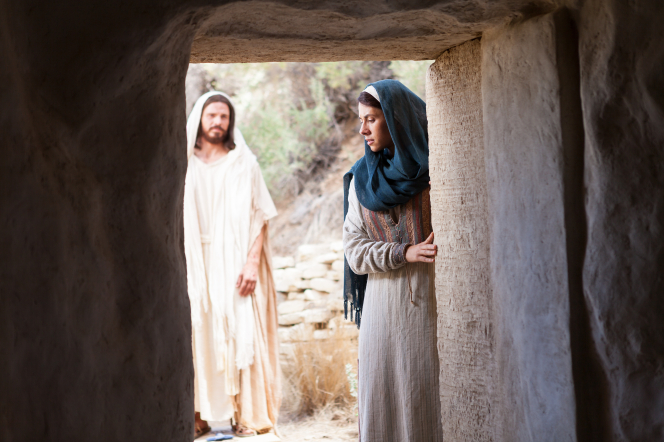
    I love hearing President Eyring read the Easter message from scripture. I love his tenderness. I have felt, and do feel the presence of the divine comforter, the Holy Spirit. It is our choice whether or not the spirit of the Lord will abide with us. "Obedience may mean to move quickly, it may mean to prepare, or it may mean to wait."
    John 20:3–18, Mary weeps outside the tomb while Christ approaches
    Mary Encounters Christ at the Tomb. lds.org. © 2018 by Intellectual Reserve, Inc. All rights reserved. Used by permission.

    Dallin H. Oaks
    The effect of small, simple changes, such as prayer, scripture study, and other spiritual observances over time is difficult to measure on a daily basis. But "over time they result in powerful spiritual uplift and growth." Seemingly insignificant private decisions, often only half-consciously made, also build up over time, either for good or ill. So we ought to be more intentional about such decisions. In addition, the currents of worldly culture will often try to push us in directions we do not want to go; so we must be continually exerting efforts to paddle in the direction we do want to go. Metaphors used to illustrate the pattern of small and simple things bringing forth great things include tree roots, paddling against the current, dripping water...I may have missed one.

    Russell M. Nelson
    There is no better way to celebrate the resurrection of the living Christ than to worship together this Easter Sunday.

    I did not know that President Nelson was not raised in an active LDS home. I appreciate that he is sharing this personal story of his upbringing by loving, tender parents who did not live the word of wisdom or follow the teachings of the gospel. When they were in their 80s, he finally received the blessing of seeing them sealed together, and being sealed to them in the temple. So many members do not come from "model" LDS homes; this story of love and hope is so important to hear from our prophet. And he speaks with equal tenderness about his first wife, Dantzel, their children, her unexpected death, and his marriage to Wendy.

    Another warning against "dangers and distractions" as we seek the influence of the Spirit in our lives.

    I also appreciate his explanation of how he sought inspiration as to whom he should call to be his counselors, to fill the vacant seats in the quorum of the twelve apostles, and the regular process of counseling in these quorums for inspiration regarding the direction of the church. "The majority never rules," but rather, they carefully listen to one another, and counsel together until unanimity is reached.

    He then reminded us of the example of the prophet Joseph Smith in seeking personal revelation--an example that all of us can follow. Revelation through the Holy Ghost is not limited to the general authorities of this church; God wants to speak to each of us. And he wants to hear from us--no matter what. I have a testimony of this. God wants me to pray, even if I'm angry with him, which I sometimes am. He can take it. And in return, he will give comfort (though sometimes it takes me a while to be able to feel it).

    And now he returns to talking about the problems generated by social media and the 24/7 news cycle. He calls it a "constant bombardment," and notes that many seek to sow disinformation and discontent. The Holy Ghost can help us discern what deserves our attention, and can provide comfort in the face of so many messages of conflict.

    Jesus is the Christ, the Son of the living God! He is our savior and redeemer. He died and was resurrected.

    ...and another international voice offers our closing prayer. I'm thankful.

    Priesthood Session

    I didn't watch the Priesthood session, but I read about the merging of Elders quorums and High Priests groups. I think it's a great adjustment.

    Sunday Afternoon Session

    You know what I love about the Bloggernacle? Specifically, #ldsconf on Twitter? Fangirling whenever the choir sings their favorite hymn. Because every hymn is somebody's favorite. Which means even when they're singing something I don't particularly care for (I don't mean "Dear to the Heart of the Shepherd; it's great), somebody on Twitter's squeeing about it, and that makes me happy. It's a reminder that messages and hymns that are not for me are signs of God's love for someone else.

    Gerritt W. Gong
    Wherever and whenever God has conferred priesthood power on Earth, he has also revealed gospel ordinances and covenants to be administered by the priesthood. To me, this helps to clarify the role and importance of the priesthood: it is in the administering of sacred ordinances.

    Ulisses Soares
    He has the coolest name of all the apostles (sorry, Dieter). He also has a lovely testimony.

    Also, we're gonna get a Holland talk, and Sister Bingham!

    Russell M. Nelson
    Wow. That's like 5 major changes in these two days. He's hitting the ground running. They're retiring home and visiting teaching as they've been known. Instead, they are creating a program called "ministering."

    Jeffrey R. Holland
    He also noted the many changes, and promised additional information about the new program via email and on the church website.

    These institutional changes, which Elder Holland calls "maturation," should engender individual maturation. The language change is partly a matter of changes in practice, and partly a matter of changes in attitude. Ministering will occur not just in the home, nor will it be primarily about "teaching." We will not necessarily focus on visiting every member every month, but will focus on what is necessary and possible. Rather than monthly reports from ministering brothers and sisters, the only reports will be the number of interviews that leaders have with ministering companionships. They don't need to know the hows and wheres and whats of our ministering, but rather the focus is on understanding the needs of the members. This is "an invitation to care for one another in a bold, new, holier way." True religion is bearing one another's burdens and comforting those that stand in need of comfort.
    "A new name, new flexibility, and fewer reports will not make one ounce of difference in our service unless we see this as an invitation to care for one another in a bold new holier way."
    I am very grateful for this change. My own situation makes it difficult for me to fulfill visiting teaching assignments in the traditionally prescribed way, and I know I'm not the only one. Under the old program, there was a lot of guilt for not doing things "by the book" that, for some, sometimes got in the way of doing anything at all. In the past couple of months I've pondered how I might talk with my VT companion and the sisters we were assigned to visit, to see if we could arrange something that met their needs and that I was able to consistently fulfill. I guess I was inspired, because it looks like that's the direction the whole church is going now.

    Jean B. Bingham
    Ministering begins with asking: how can I bring the light of the Spirit to this family? What is the Spirit inspiring me to do? How can I serve them in ways that best meet their current needs? Simple acts of kindness and service are often what is needed; sometimes, a great, coordinated effort of the ward is necessary. We will not be able to fulfill this calling to minister without getting to know each other better.

    I love that Sister Bingham draws her examples from brothers and sisters of many ages.

    This new program will involve partnering Young Women with the Relief Society. This service will help young women prepare for service and leadership in the church, community, and family. YES. I've been hoping and praying for this for ages.

    Both she and Elder Holland note that emails, text messages, social media messages, phone calls, and simple conversations may all serve the purpose of ministering to one another.

    Dieter F. Uchtdorf
    "Recently, I asked the internet..." (the conference center fills with laughter) "...what was the most important day in history." My reply would be, it was the day of the resurrection. Elder Uchtdorf says that it was the night Jesus spent in Gethsemane, where our doctrine teaches the greatest portion of his atonement was performed, as he took upon himself all our sins and sorrows. Later that night, he was put on trial and crucified, and he died the following morning, to rise on the morning of the third day--the day of the resurrection. So I guess we agree, but he was stretching the definition of a "day."

    Every one of us, one day, will die. And because of Jesus Christ, every one of us, one day, will rise from the grave and live again eternally. Even more importantly, every one of us has been separated from God, and it is through the atonement of Jesus Christ that we will see our God again, face to face. Because of Him, regardless of our past, we can repent and become like Him.

    "This is what we celebrate on Easter. We celebrate life." Life everlasting, and in the glory of exaltation.

    And now he is recounting the story of the crucifixion and resurrection. Thank you, Elder Uchtdorf. We need this message every day, but especially on Easter.

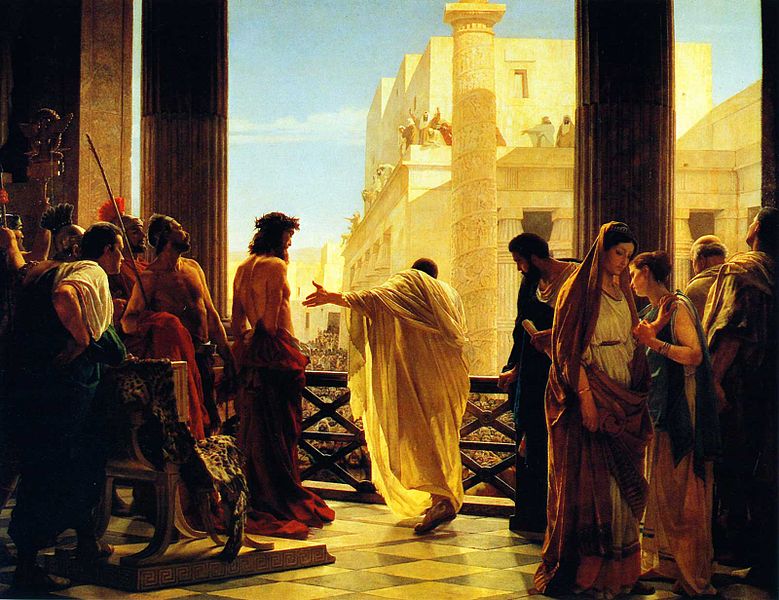
    When Pilate presented Jesus, scourged and clothed in purple robes, he said, "Behold the man!" But, says Elder Uchtdorf, "They could see him, but could not behold him. They did not have eyes to see." Like them, we are invited to "behold the man." Let us have eyes to see him! When we truly "behold the man, we learn of him, repent, strive to refine our natures, and daily grow a little closer to him."

    File:Eccehomo1.jpg
    "Ecce Homo" or "Behold the Man" by Antonio Ciseri. Public Domain. Source: Wikimedia Commons
    "The most important day in your life and mine is the day when we learn to 'behold the man.'" And this is why "we talk of Christ, we rejoice in Christ, we preach of Christ, we prophesy of Christ, and we write according to our prophecies, that our children may know to what source they may look for a remission of their sins." (2 Nephi 25:26)

    So, Elder Uchtdorf didn't tell a story about being a pilot this time. Instead, he talked about Pilate.

    I feel simultaneously exhausted and exhilarated by this conference, y'all. So many great changes. So many great messages.

    Gérald Caussé
    Our church infrastructure provides enormous opportunity to care for one another and for our neighbors. But the mission of the church is not about that infrastructure: it is about sanctifying the saints, or in other words, all of us, the disciples of Christ. Am I active in the gospel, or just busy in the church?

    Our presence and influence can (and should) be enough to make wherever we find ourselves a holy place.

    Instead of saying "the church is true," I will strive to be true to the gospel. When the members are true, the church is true.

    Quentin L. Cook
    Well, I'm awake, but I confess that my mind is sluggish as we move toward the end of 8-10 hours of church in one weekend. I caught something about the restoration of priesthood keys, and family history and temple work, denunciation of sexual immorality and specifically the objectification of women, and unity vs. tribalism (ty for that, Elder Cook), and lots of other things, and I'm just having trouble following this message.

    It's like going to academic conferences; it's hard to take all the talks in. I'm grateful that these messages are published online, so that I can return to them, one at a time, to watch/listen/read and ponder.

    Resources:
    Watch/listen/read past conference messages at conference.lds.org
    Deseret News has summaries of all the conference talks.

    Russell M. Nelson
    Concluding remarks--summarizing key events and messages this conference, and entreating us to study these messages, take courage, press on, and do the work we have been called to do. Announcing 7 more temples, in: Argentina, India, Nicaragua, Phillipines, Utah (lots of laughter after many gasps), Virginia, and Russia (biggest gasps of all). Prophetic blessings pronounced.

    Writing Leftovers

    Usually when I’m revising, there’s a stage at which I realize I have to cut some stuff, either because it’s kind of tangential to the focus ...