- For the past couple of months I have occasionally had this intense yearning to go home, but I honestly do not know where home is. I grew up in Orem, Utah, and spent my early teens in the Salt Lake valley. I still feel a strong sense of belonging every time I see the Wasatch mountains, yet I really have no desire to settle down in what's known by locals (with about equal measures of affection and sarcasm) as "Happy Valley." It's the place of my birth, but it isn't home. Not anymore.
Nor is my parents' house in Idaho, where they've lived since I was 16. I love to visit. I enjoy my family's long conversations about all sorts of things, cooking with my mom, watching movies with my brother, and helping out around the house. It is and always will be a place of love, welcome, and safety. But there was a subtle shift that happened at some point, a few years ago, when I stopped mentally referring to it as "home" and started thinking of it as "Mom and Dad's place." Sleeping in my old room feels strange--like well-worn clothes that no longer fit right.
In the first five years after moving out of my parents' house, I moved seven times (that's student life for you). I've had good roommates, and I've lived alone. I've lived in a couple of houses and a few apartments; in Rexburg, Idaho; Pullman, Washington; Rexburg again; then St. George, Utah; and finally Mesa, Arizona, where I've stayed put, thankfully, for nearly two solid years now in a nice house with roommates who are also friends, great rent, a garden and chickens, and room enough for all my books. I have no plans to move again until life moves me. Yet none of these places have felt like home--just a good place to live for a while.
I feel unrooted. Home is a place that doesn't exist yet. What if I never get there?
"Home", a Piano Guys cover filmed near Zion National Park in Utah
Tuesday, May 28, 2013

Saturday, May 25, 2013
Entertainment Reviews
I'm thinking about posting something complicated and academic to do with the nature of words. But let's face it, I've pretty much blown the first two weeks of summer on entertainment, instead of making progress on my giant pile of academic reading or, you know, analyzing the data for that research project that I'm supposed to have finished by the end of June. Anyway. I'm still procrastinating brain work, so I'm going to write about entertainment instead.
Part 1: Portal 2 Is the Best Game Ever
Don't even try to argue with me. I spent much of last weekend playing Portal 2. Nancy got me to play Portal way back in 2011, and I've been waiting forever for a chance to play the sequel because up until last month, my PC only ever ran Linux. Since I finally broke down and bought a Windows desktop, I got the Portal Pack from Steam (and the Universe laughed, because right about the same time, Steam added Linux support--but it wouldn't have run well on my geriatric Ubuntu laptop anyway).
I could explain what makes Portal and Portal 2 so awesome, but these games have been around for ages, so I'm sure you can google an actual review. Instead, I'll just finish this section by observing that Portal 2 and zucchini bread are now forever linked in my mind, because who has time for proper meals when there's science to be done?
Part 2: Zucchini Bread, The Nearly Perfect Food?
Making food and eating it (with our without sharing, but preferably with) are among the oldest and best forms of entertainment. We recently started harvesting zucchini from Stephanie's garden, so naturally I had to make some bread. It's got vegetables (the eponymous zucchini), protein (an egg), and grains (I even use part whole wheat flour). And I don't eat dairy, so that's all the necessary food groups right there. Makes you wonder why anybody ever eats anything else.
Part 3: I Suck at Kickball, or Maybe Kickball Just Sucks
It just might be the easiest team sport ever, yet I managed to take myself out of the game during my second inning by tripping at a run over a pathetically small mound of dirt and narrowly averting a total faceplant. Now my bad knee is worse. I think in future I'll stick to safer sports, like slacklining and rock climbing.
Part 4: Summer Blockbusters
Even though sequels are rarely brilliant, I've been looking forward to Iron Man 3 and Star Trek Into Darkness. I thoroughly enjoyed their predecessors and I was prepared for more of the same, if somewhat watered-down, which is pretty much what I got. Of the two, I think Iron Man 3 is the better film. The reveal in IM3 actually surprised me, unlike the total non-surprise of STID. Also, I've emotionally invested in the Marvel universe's characters in a way that I have yet to do with anybody but maybe Spock in the Abrams Star Trek universe, so that helps. I really like what they've done with Tony Stark's character arc, though I'm not sure how much character development is left for him at this point--enough to get him through Avengers 2, I hope. Iron Man 3 wasn't as good as 1 and 2, but I'll happily add it to my collection. I think STID was worth the price of admission, but Benedict Cumberbatch aside, I'm not all that eager to watch it again.
Part 5: Books!
My pile of grad student reading is so large that I feel guilty about reading for fun, but lately I've been really wanting to re-read Dune. Plus, I borrowed In the Beginning Was the Command Line from a friend the other day. Decisions, decisions....
Part 1: Portal 2 Is the Best Game Ever
Don't even try to argue with me. I spent much of last weekend playing Portal 2. Nancy got me to play Portal way back in 2011, and I've been waiting forever for a chance to play the sequel because up until last month, my PC only ever ran Linux. Since I finally broke down and bought a Windows desktop, I got the Portal Pack from Steam (and the Universe laughed, because right about the same time, Steam added Linux support--but it wouldn't have run well on my geriatric Ubuntu laptop anyway).
I could explain what makes Portal and Portal 2 so awesome, but these games have been around for ages, so I'm sure you can google an actual review. Instead, I'll just finish this section by observing that Portal 2 and zucchini bread are now forever linked in my mind, because who has time for proper meals when there's science to be done?
Part 2: Zucchini Bread, The Nearly Perfect Food?
Making food and eating it (with our without sharing, but preferably with) are among the oldest and best forms of entertainment. We recently started harvesting zucchini from Stephanie's garden, so naturally I had to make some bread. It's got vegetables (the eponymous zucchini), protein (an egg), and grains (I even use part whole wheat flour). And I don't eat dairy, so that's all the necessary food groups right there. Makes you wonder why anybody ever eats anything else.
Part 3: I Suck at Kickball, or Maybe Kickball Just Sucks
It just might be the easiest team sport ever, yet I managed to take myself out of the game during my second inning by tripping at a run over a pathetically small mound of dirt and narrowly averting a total faceplant. Now my bad knee is worse. I think in future I'll stick to safer sports, like slacklining and rock climbing.
Part 4: Summer Blockbusters
Even though sequels are rarely brilliant, I've been looking forward to Iron Man 3 and Star Trek Into Darkness. I thoroughly enjoyed their predecessors and I was prepared for more of the same, if somewhat watered-down, which is pretty much what I got. Of the two, I think Iron Man 3 is the better film. The reveal in IM3 actually surprised me, unlike the total non-surprise of STID. Also, I've emotionally invested in the Marvel universe's characters in a way that I have yet to do with anybody but maybe Spock in the Abrams Star Trek universe, so that helps. I really like what they've done with Tony Stark's character arc, though I'm not sure how much character development is left for him at this point--enough to get him through Avengers 2, I hope. Iron Man 3 wasn't as good as 1 and 2, but I'll happily add it to my collection. I think STID was worth the price of admission, but Benedict Cumberbatch aside, I'm not all that eager to watch it again.
Part 5: Books!
My pile of grad student reading is so large that I feel guilty about reading for fun, but lately I've been really wanting to re-read Dune. Plus, I borrowed In the Beginning Was the Command Line from a friend the other day. Decisions, decisions....
Sunday, May 19, 2013
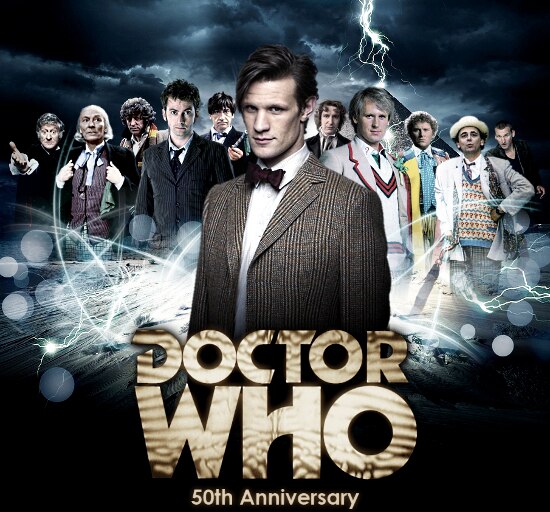
Doctor Who Season 7 Review (No spoilers, sweetie!)
I just finished watching the finale to the seventh season of Doctor Who. Here's my spoiler-free review:
I really liked "The Name of the Doctor"! It delivered some surprises plus the biggest dose of classic Who references all season (as is only right), was solidly plotted (by Doctor Who standards) and was visually really, really impressive. Also, the ending has me stoked for the 50th anniversary special this November. It was far from perfect, but then season finales often are. By comparison, I'd say this is one of the better ones--certainly better than the season 6 finale.
Overall, though, Season 7 has been fairly weak. There was only one really terrible episode, if you ask me, but there were no stunners, either. Most people seem to be blaming current head writer, Steven Moffat, and of course as the boss, he does bear some of the blame. But I think he deserves some credit, too. This was an ambitious season. Because 2013 marks the 50th anniversary of Doctor Who, expectations were high, and Moffat's team had a plan that, on the surface, seemed like a good idea.
Each of the season's 13 episodes would be "cinematic". They even made "movie posters" for every episode. Each episode was a Doctor Who-style pastiche of a different movie genre. And it nearly worked. Some people have complained that this style was a betrayal of the show's essential character, but that's clearly rubbish. After all, in the last 50 years Doctor Who has had many identities--not just the title character, but the show itself has changed its style, its personality, many, many times.
I think there are a few reasons why the movie-of-the-week format only nearly worked this season. First, changing flavors that rapidly has got to be hellishly difficult, and Doctor Who is notoriously complicated and difficult already. Second, a number of those stories clearly needed more than 45 minutes, but thanks to all the whining about multi-part stories last season they decided that every episode this season would have to be stand-alone. Third (possibly related), the editing was frequently awful. Fourth, and probably the most important lesson to be learned from this season--Doctor Who, like the Tardis, is bigger on the inside. When you make it bigger on the outside, it becomes paradoxically smaller.
What I mean is, the bigger you try to make the show, the more obvious it becomes that it's really still quite small. People always go on about the comically low-budget effects of the classic series, and to a lesser degree the new series. I mean, it's ridiculous, right? A show that is about an enormously powerful alien with a ship that can take him anywhere in the universe, a universe that he frequently must save from total destruction--and usually all we see of these epic conflicts are a handful of stuntmen clumsily fighting rubber-suited aliens in a London back alley, and ultimately the Doctor saves the day with just a sonic screwdriver and a bit of dodgy CGI.
We fans have said it so often that it's a cliche, but that weakness is actually a strength. That smallness causes two things: one, without the budget for epic battle scenes, the show has to focus on a few key characters, on how they respond to the galaxy-shattering events around them, and in a way that makes it a lot more like real life. Two, imagination has infinitely more resources than the biggest budget (it's like the production equivalent of the Law of Conservation of Ninjutsu). I'm not saying the BBC should spend less money on the show. I'm delighted that the new series looks so much better than the classic series. I'm saying they should think differently about how they spend that money--on quality rather than quantity.
That said, in many ways I'm very pleased with how season 7 turned out. The first episode, "Asylum of the Daleks," was mostly great. Despite a couple of bad moments, it's probably the best episode of the season, though "Nightmare in Silver" was also good up until the very end (how about that! A Dalek and a Cyberman episode being among the best of the season seems fitting). The regular nods to the classic series were delightful to me as a lifelong fan, and though most of them went right over my roommate's head, she was not bothered by them. The best of these by far was the identity of the new head of UNIT back in "The Power of Three". Such "Easter eggs" highlighting the show's history could have been handled badly, but instead they were just the right amount of nostalgia, and helped to build the overall arc of the season.
Looking to the future, I am looking forward to the 50th Anniversary special. It's a multi-Doctor story (as were the 10th and 20th anniversary specials). Based on the build-up this season, we can expect an epic scope, but based on the history of Doctor Who anniversary specials, we can also expect that the story will be largely at the service of nostalgia. What I'm saying is, approach it with modest expectations and just enjoy the fan wank. I'm going to get a big bag of jelly babies and eat one every time there's a new classic series nod, and two every time the Doctors insult each other (feel free to add more "Jelly Baby Eating Game" ideas in the comments).
As for season 8, I'd like to see Clara get more character development, and Coleman is obviously having a lot of fun playing her, which makes her a pleasure to watch. I doubt Smith and Moffat will stay on much longer, though they are confirmed through 2014, and that's probably for the best. The show is always going in new directions. I do hope that, when Moffat steps down, he comes back once in a while to write an episode. He has his shortcomings as a showrunner, but when it comes to writing episodes, there's really no-one better.
Please, if you include spoilers in the comments--that means plot details for any episode of season 7, please mark them with a "SPOILER WARNING" and include some white space. A lot of my friends haven't seen any/all of the season yet. But I'm happy to talk details of any episode.
P.S. I was right about Clara. I was also right, thank goodness, about the finale episode's title.

I really liked "The Name of the Doctor"! It delivered some surprises plus the biggest dose of classic Who references all season (as is only right), was solidly plotted (by Doctor Who standards) and was visually really, really impressive. Also, the ending has me stoked for the 50th anniversary special this November. It was far from perfect, but then season finales often are. By comparison, I'd say this is one of the better ones--certainly better than the season 6 finale.
Overall, though, Season 7 has been fairly weak. There was only one really terrible episode, if you ask me, but there were no stunners, either. Most people seem to be blaming current head writer, Steven Moffat, and of course as the boss, he does bear some of the blame. But I think he deserves some credit, too. This was an ambitious season. Because 2013 marks the 50th anniversary of Doctor Who, expectations were high, and Moffat's team had a plan that, on the surface, seemed like a good idea.
Each of the season's 13 episodes would be "cinematic". They even made "movie posters" for every episode. Each episode was a Doctor Who-style pastiche of a different movie genre. And it nearly worked. Some people have complained that this style was a betrayal of the show's essential character, but that's clearly rubbish. After all, in the last 50 years Doctor Who has had many identities--not just the title character, but the show itself has changed its style, its personality, many, many times.
I think there are a few reasons why the movie-of-the-week format only nearly worked this season. First, changing flavors that rapidly has got to be hellishly difficult, and Doctor Who is notoriously complicated and difficult already. Second, a number of those stories clearly needed more than 45 minutes, but thanks to all the whining about multi-part stories last season they decided that every episode this season would have to be stand-alone. Third (possibly related), the editing was frequently awful. Fourth, and probably the most important lesson to be learned from this season--Doctor Who, like the Tardis, is bigger on the inside. When you make it bigger on the outside, it becomes paradoxically smaller.
What I mean is, the bigger you try to make the show, the more obvious it becomes that it's really still quite small. People always go on about the comically low-budget effects of the classic series, and to a lesser degree the new series. I mean, it's ridiculous, right? A show that is about an enormously powerful alien with a ship that can take him anywhere in the universe, a universe that he frequently must save from total destruction--and usually all we see of these epic conflicts are a handful of stuntmen clumsily fighting rubber-suited aliens in a London back alley, and ultimately the Doctor saves the day with just a sonic screwdriver and a bit of dodgy CGI.
We fans have said it so often that it's a cliche, but that weakness is actually a strength. That smallness causes two things: one, without the budget for epic battle scenes, the show has to focus on a few key characters, on how they respond to the galaxy-shattering events around them, and in a way that makes it a lot more like real life. Two, imagination has infinitely more resources than the biggest budget (it's like the production equivalent of the Law of Conservation of Ninjutsu). I'm not saying the BBC should spend less money on the show. I'm delighted that the new series looks so much better than the classic series. I'm saying they should think differently about how they spend that money--on quality rather than quantity.
That said, in many ways I'm very pleased with how season 7 turned out. The first episode, "Asylum of the Daleks," was mostly great. Despite a couple of bad moments, it's probably the best episode of the season, though "Nightmare in Silver" was also good up until the very end (how about that! A Dalek and a Cyberman episode being among the best of the season seems fitting). The regular nods to the classic series were delightful to me as a lifelong fan, and though most of them went right over my roommate's head, she was not bothered by them. The best of these by far was the identity of the new head of UNIT back in "The Power of Three". Such "Easter eggs" highlighting the show's history could have been handled badly, but instead they were just the right amount of nostalgia, and helped to build the overall arc of the season.
Looking to the future, I am looking forward to the 50th Anniversary special. It's a multi-Doctor story (as were the 10th and 20th anniversary specials). Based on the build-up this season, we can expect an epic scope, but based on the history of Doctor Who anniversary specials, we can also expect that the story will be largely at the service of nostalgia. What I'm saying is, approach it with modest expectations and just enjoy the fan wank. I'm going to get a big bag of jelly babies and eat one every time there's a new classic series nod, and two every time the Doctors insult each other (feel free to add more "Jelly Baby Eating Game" ideas in the comments).
As for season 8, I'd like to see Clara get more character development, and Coleman is obviously having a lot of fun playing her, which makes her a pleasure to watch. I doubt Smith and Moffat will stay on much longer, though they are confirmed through 2014, and that's probably for the best. The show is always going in new directions. I do hope that, when Moffat steps down, he comes back once in a while to write an episode. He has his shortcomings as a showrunner, but when it comes to writing episodes, there's really no-one better.
Please, if you include spoilers in the comments--that means plot details for any episode of season 7, please mark them with a "SPOILER WARNING" and include some white space. A lot of my friends haven't seen any/all of the season yet. But I'm happy to talk details of any episode.
P.S. I was right about Clara. I was also right, thank goodness, about the finale episode's title.
Wednesday, May 15, 2013
10 Things I Learned This Semester
In no particular order:
- I'm a terrible, terrible blogger.
- Insect invaders must be fought quickly, using the strongest possible methods.
- Going to three academic conferences in one month is totally exhausting, and also kinda fun.
- I HATE Las Vegas, with a fiery passion of hatred.
- The amount of things I have to do stresses me out more than the overall amount of work I have to do. Lots of little projects and tasks are more stressful than a few big ones.
- Two computer screens are better than one.
- If you yell and complain and sulk and snark in your prayers, God doesn't get mad. He's just glad you're still talking to him.
- Telling people you study metadisciplinary discourses sounds impressive, but is really hard to explain.
- Pink Floyd's The Dark Side of the Moon is totally awesome, and excellent music to study/write/grade by. Seriously, how did I not ever hear this album until a month ago?
- Sometimes, the people close to you are not lovable. Love them anyway. Sometimes, you are not lovable. Allow yourself to be loved anyway. Love is a gift; it can't be earned. Strive to live up to it anyway.
And now for something completely different:
Last month I gave a presentation on "Why We Need Stories" at an LDS Mid-Singles "Expert Night" (Kind of like a mini, Mormon version of a TED conference). I included this painting, "Once Upon a Time", by James Christensen, in my PowerPoint because, well, look at it! It's gorgeous! This has been one of my favorite paintings since I was a kid. But check it out: there's a Weeping Angel standing there in the corner! Those sweet faerie creatures have no idea that they're all about to die. Curse you, Steven Moffat!

Saturday, February 2, 2013
Beginnings and Endings, or 2012, in Memoriam
Conventionally, one posts this sort of post a little closer to January 1st. A month in the blogsphere is an eternity, and it's been closer to three since my last post. However, time is not a straight line, conventionality is nothing to aspire to, and therefore you should forgive the giant lapse between posts, and also the self-absorption of today's post. Rebeccaland is supposed to be some kind of outside manifestation of my insides, after all, and while usually the landscape of my insides draws a lot more from the outside, right now from my vantage point that landscape looks pretty barren, and my insides are all dark and red and squishy. I promise to send my insides for a long scenic walk before my next post. Anyway, I'm afraid if I don't post something soon my blogging aspirations will atrophy completely.
In retrospect it seems like 2012 was kind of a crap year for me, except for the bits that were awesome (there are always awesome bits). There was a pretty long stretch in the middle of the year that was relatively uneventful. However, what makes my 2012 memorable is that it began with a cancer scare, and ended with...look, I tried to think of some way to write this that didn't sound cliche, but the problem with love is that it's all cliche unless you're living it, so I'm just going to embrace the cliche. My year ended with a broken heart.
I found out last January that I had a thyroid mass that was constricting my airway and might have been cancer. I had surgery, then developed several very unpleasant complications.
But. I didn't have cancer. I was supported by many wonderful friends, family, and colleagues. I did eventually fully recover. Insurance covered more than I expected. The scar healed beautifully.
In September, I fell in love. I was happier than I've ever been. A life that looked bigger and better than I hoped and dreamed and prayed for seemed within reach. But on New Years Day, I was alone again, with a life that seemed so, so much smaller.
But. I loved, and was loved. God willing, it won't be the last time.
Last year, I learned that I am stronger than I think I am, and also much more fragile. I learned that often, the most comforting thing is just a silent hug (and sometimes it's a box full of sumo wrestler rubber duckies). I learned that losing love hurts worse than having your throat slit (and takes longer to heal), but given a choice, even in hindsight, I'd choose love.
"The way I see it, every life is a pile of good things and bad things. The good things don't always soften the bad things, but vice-versa, the bad things don't necessarily spoil the good things or make them unimportant."
-The Doctor, "Vincent and the Doctor", Doctor Who

Speaking of landscapes, here is Van Gogh's "Kornfeld mit Zypressen", courtesy of Wikimedia Commons. Its colors remind me of Arizona in the winter. Van Gogh knew more than I do about suffering--and about beauty.
Thursday, November 8, 2012
DigiWriMo Update, and not much else.
Life has a way of getting in the way of goals. I'm swamped. I'm not giving up on DigiWriMo yet, but I'm giving myself a break for not having posted anything since Saturday. I lost track of some of my digital writing since then, but of what I can track, I was at 4305 words from my last post until I started writing this one. And just for fun, here's a frequency count of the 10 most common words I typed or texted:
Word Count
Running total: 8,246
Day 8 target: 13,336
- me 29 (8%)
- just 19 (5%)
- think 19 (5%)
- data 19 (5%)
- good 18 (5%)
- how 18 (5%)
- Joe 18 (5%)
- too 17 (5%)
- don't 17 (5%)
- will 15 (4%)
Word Count
Running total: 8,246
Day 8 target: 13,336
Saturday, November 3, 2012
Writing on writing
This is going to be longish, folks--I've got some catching up to do on my word count. And since I'm having trouble thinking of what to write about, I'm going to do what any self-respecting scholar would do: I'm going to go meta, and write about writing.
The first human writing was primarily numbers, for record keeping. Wikipedia tells me that the first writing of language occurred in at least two times and places, independently: in ancient Sumer around 3200 BCE, and Mesoamerica around 600 BCE. The Sumerians, humanity's earliest known writers, wrote using a stylus on clay tablets, and their writing was initially used for bookkeeping.
The Egyptians, who may or may not have developed their hieroglyphic writing system due to the influence of the Sumerians, used writing not only for economic but also for religious and military purposes. Semitic workers developed an alphabet in Ancient Egypt around 1800 BCE. These "Proto-Semites" wrote graffiti and "votive texts" on Mount Sinai.
The Ancient Chinese wrote divinatory texts on bones and turtle shells. And the earliest known writers in the Americas, the Maya, likewise initially tended to employ writing for sacred purposes.
Eventually people started using writing not only for economic or devotional purposes, but also to record ideas and poetry. I sometimes wonder whether those early writers ever struggled to think of what to write.
Plato's Socrates (really the only Socrates we know, since he never wrote anything himself) was suspicious of writing. He argued (quite correctly, as it turned out) that writing would destroy memory and cause people to profess knowledge they did not actually possess. Memory and knowledge meant something rather different in oral cultures than they do now, of course. It is true that, if you can write something down, you don't have to commit it to memory--and that a memory recorded externally is qualitatively different from a memory etched in the mind. Our memories are not what they were.
The problem with writing, Socrates said, was that you can't ask it questions--or at least you can, but it can't explain itself; it can only repeat the same words again and again. And that is why it doesn't count as knowledge--to know something means to be able to explain and re-explain how you know it. Writing doesn't "know", it just "is," but it enables people who can read it to pretend to knowledge they haven't "earned"--they haven't worked it out for themselves, but just gotten it from a book. So, with writing, something was lost, but something was also gained.
I wonder how often Plato struggled to find words for his ideas. I wonder how often he struggled to find ideas for his words.
The problem of what to say (or write) and how is one of the two primary concerns of rhetoric (the other is analyzing what's been said and how). Classical rhetoric broke the problem down into five canons: invention, arrangement, style, memory, and delivery. Scholars continue to argue about which of the canons deserve the most attention, but since I've started this blog, invention has been on my mind.
For ancient rhetoricians, invention was all about the topoi--the topics, or places to find things. But they weren't really talking about things to write about or places where ideas could be found--such a catalogue, being potentially infinite, could never be completed, and Aristotle, the great systematizer of ancient rhetoric, did something much more clever. His topoi represent "basic categories of relationships among ideas". And the ways we can construct relationships among ideas turn out to be rather more manageable.
Anyway. Those who know me, know that I am rarely at a loss for something to say. But having something to write seems to be quite another matter. And having something to write about every day seems positively daunting. Aristotle reminds me that it isn't so much having something to write about, but about making connections.
Audience is another problem. Not only do I have to think about who might be reading this blog, but also who might read it in the future. Like everyone, I have multiple identities: sister, daughter, friend, colleague, scholar, teacher, student, Latter-day Saint, woman, Latter-day Saint woman (yes, those are three distinct, though never separate identities), Doctor Who fan, roommate, among others. Many of those identities overlap, but they are sometimes in tension with one another (scholar and Latter-day Saint, for instance, are often perceived by others as being in tension, if not generally by me--but that perception itself generates a tension). And new identities arise over time.
When I write this blog, which "me" am I? And which of "you" am I writing to? Perhaps, in writing this, I am calling forth new identities for myself and my audience. All of these identities and the tensions between them are, of course, sites of rhetorical invention--they represent potential relationships among ideas, as well as actual relationships between people.
The stakes are not trivial. It may be that I will never have more than a handful of readers. Perhaps only family and friends, but potentially also future employers, colleagues, federal agents, and the odd web-crawling AI. I hope, at any rate, that my readers will be friendly, or at the very least, kindly disposed toward the "me" that is embodied in the words that I write.
The full title of this blog, generously supplied by my good friend Nancy, is "Rebeccaland: where everything is just like it is in my head." That title was a bit too long for Blogger to display properly, so I shortened it, but in shortening it, something was lost. Indeed, I've been meditating on this very interesting title for the last few days. Nancy loves layers of meaning--I mean, loves them even more than I do, and that's saying a lot. She's a Joyce scholar.
The title is both the product of invention, and a new site of invention. It is the product of the particular relationship among the ideas that I have of Nancy and she has of me and each of us have of what blogging is or can be--among other things. It also represents the potential range of topics this blog might contain, and suggests a certain attitude toward them (an attitude which is tied to that complex of interpersonal perceptions I just talked about).
Basically, I think that this blog isn't so much going to be like the inside of my head (which is really full of a great many things that ought best to stay inside my head; they won't stand for being shoved onto the front stage of a blog), as it is like what Nancy thinks the inside of my head is like--a bit like Disneyland, only without the commercialism, and with more books. So, like a cross between Disneyland and a library. Or, to put it another way, it will be full of random happy geeky things with a generous side of pondersomeness (and the odd neologism sprinkled in here and there).
Word Count
Friday: 221
Saturday: 1893
Running total: 3815
Day 3 target: 5001
The first human writing was primarily numbers, for record keeping. Wikipedia tells me that the first writing of language occurred in at least two times and places, independently: in ancient Sumer around 3200 BCE, and Mesoamerica around 600 BCE. The Sumerians, humanity's earliest known writers, wrote using a stylus on clay tablets, and their writing was initially used for bookkeeping.
The Egyptians, who may or may not have developed their hieroglyphic writing system due to the influence of the Sumerians, used writing not only for economic but also for religious and military purposes. Semitic workers developed an alphabet in Ancient Egypt around 1800 BCE. These "Proto-Semites" wrote graffiti and "votive texts" on Mount Sinai.
The Ancient Chinese wrote divinatory texts on bones and turtle shells. And the earliest known writers in the Americas, the Maya, likewise initially tended to employ writing for sacred purposes.
Eventually people started using writing not only for economic or devotional purposes, but also to record ideas and poetry. I sometimes wonder whether those early writers ever struggled to think of what to write.
Plato's Socrates (really the only Socrates we know, since he never wrote anything himself) was suspicious of writing. He argued (quite correctly, as it turned out) that writing would destroy memory and cause people to profess knowledge they did not actually possess. Memory and knowledge meant something rather different in oral cultures than they do now, of course. It is true that, if you can write something down, you don't have to commit it to memory--and that a memory recorded externally is qualitatively different from a memory etched in the mind. Our memories are not what they were.
The problem with writing, Socrates said, was that you can't ask it questions--or at least you can, but it can't explain itself; it can only repeat the same words again and again. And that is why it doesn't count as knowledge--to know something means to be able to explain and re-explain how you know it. Writing doesn't "know", it just "is," but it enables people who can read it to pretend to knowledge they haven't "earned"--they haven't worked it out for themselves, but just gotten it from a book. So, with writing, something was lost, but something was also gained.
I wonder how often Plato struggled to find words for his ideas. I wonder how often he struggled to find ideas for his words.
The problem of what to say (or write) and how is one of the two primary concerns of rhetoric (the other is analyzing what's been said and how). Classical rhetoric broke the problem down into five canons: invention, arrangement, style, memory, and delivery. Scholars continue to argue about which of the canons deserve the most attention, but since I've started this blog, invention has been on my mind.
For ancient rhetoricians, invention was all about the topoi--the topics, or places to find things. But they weren't really talking about things to write about or places where ideas could be found--such a catalogue, being potentially infinite, could never be completed, and Aristotle, the great systematizer of ancient rhetoric, did something much more clever. His topoi represent "basic categories of relationships among ideas". And the ways we can construct relationships among ideas turn out to be rather more manageable.
Anyway. Those who know me, know that I am rarely at a loss for something to say. But having something to write seems to be quite another matter. And having something to write about every day seems positively daunting. Aristotle reminds me that it isn't so much having something to write about, but about making connections.
Audience is another problem. Not only do I have to think about who might be reading this blog, but also who might read it in the future. Like everyone, I have multiple identities: sister, daughter, friend, colleague, scholar, teacher, student, Latter-day Saint, woman, Latter-day Saint woman (yes, those are three distinct, though never separate identities), Doctor Who fan, roommate, among others. Many of those identities overlap, but they are sometimes in tension with one another (scholar and Latter-day Saint, for instance, are often perceived by others as being in tension, if not generally by me--but that perception itself generates a tension). And new identities arise over time.
When I write this blog, which "me" am I? And which of "you" am I writing to? Perhaps, in writing this, I am calling forth new identities for myself and my audience. All of these identities and the tensions between them are, of course, sites of rhetorical invention--they represent potential relationships among ideas, as well as actual relationships between people.
The stakes are not trivial. It may be that I will never have more than a handful of readers. Perhaps only family and friends, but potentially also future employers, colleagues, federal agents, and the odd web-crawling AI. I hope, at any rate, that my readers will be friendly, or at the very least, kindly disposed toward the "me" that is embodied in the words that I write.
The full title of this blog, generously supplied by my good friend Nancy, is "Rebeccaland: where everything is just like it is in my head." That title was a bit too long for Blogger to display properly, so I shortened it, but in shortening it, something was lost. Indeed, I've been meditating on this very interesting title for the last few days. Nancy loves layers of meaning--I mean, loves them even more than I do, and that's saying a lot. She's a Joyce scholar.
The title is both the product of invention, and a new site of invention. It is the product of the particular relationship among the ideas that I have of Nancy and she has of me and each of us have of what blogging is or can be--among other things. It also represents the potential range of topics this blog might contain, and suggests a certain attitude toward them (an attitude which is tied to that complex of interpersonal perceptions I just talked about).
Basically, I think that this blog isn't so much going to be like the inside of my head (which is really full of a great many things that ought best to stay inside my head; they won't stand for being shoved onto the front stage of a blog), as it is like what Nancy thinks the inside of my head is like--a bit like Disneyland, only without the commercialism, and with more books. So, like a cross between Disneyland and a library. Or, to put it another way, it will be full of random happy geeky things with a generous side of pondersomeness (and the odd neologism sprinkled in here and there).
Word Count
Friday: 221
Saturday: 1893
Running total: 3815
Day 3 target: 5001
Subscribe to:
Posts (Atom)
Writing Leftovers
Usually when I’m revising, there’s a stage at which I realize I have to cut some stuff, either because it’s kind of tangential to the focus ...

-
.jpg) With tongue planted firmly in cheek, I present to you: Latter-day Saint readers will recognize this immediately. For the rest of you,...
With tongue planted firmly in cheek, I present to you: Latter-day Saint readers will recognize this immediately. For the rest of you,... -
 Here's a definition of feminism from Wikipedia: Feminism is a collection of movements and ideologies aimed at defining, establishing, ...
 -
For the past couple of months I have occasionally had this intense yearning to go home, but I honestly do not know where home is. I ...
